
Medicine as the art of mindset and presence: Professor Romans Lācis on the importance of patient dialogue


Recently, RSU Emeritus Professor Romāns Lācis, one of Latvia’s leading cardiac surgeons, celebrated a significant anniversary.
The professor’s name is part of medical history, as his team performed the first heart transplant surgery in Latvia in 2002. In addition to performing over 5,000 different heart surgeries, being a long-standing Head of the Cardiac Surgery Centre at Pauls Stradiņš Clinical University Hospital and teaching prospective doctors for years, Prof. Lācis also founded the RSU Alumni Association and was its first head.
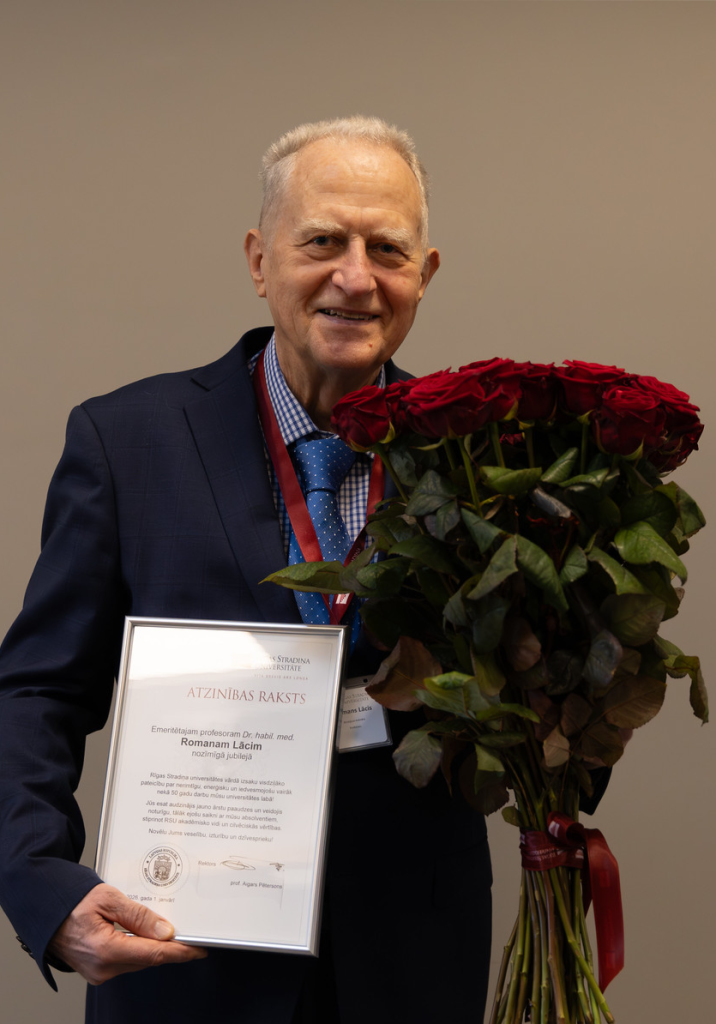
Currently, he leads the Cardiac Surgery Residency Programme, passing on to students the knowledge and professional experience he has gained over more than 50 years of clinical practice. At the same time, Prof. Lācis continues his active professional work at Pauls Stradiņš Clinical University Hospital, allowing RSU students learn directly from a high-level practicing specialist.
Professor, what do you find most important to you these days?
People are most important to me – both students and patients. Medicine is not just about transferring knowledge. It is about attitude. And attitude comes through contact, direct communication.
Medicine is a profession of being present. It matters how a person thinks, how they speak, how they are able to formulate their ideas and opinions. And also, how they treat other people and behave themselves.
I often speak about Hippocrates and the importance of history. People must not forget their roots and that healing is an art. Hippocrates said that the art of healing is the highest of all art forms, yet today, it is undervalued. He said it even more directly: ‘physicians are many in title but very few in reality’.
What do you mean by the idea that there are too few doctors?
It means that there are few people who have a genuine respect and compassion for their patients. The idea is simple, yet putting it into practice is often very difficult, as you can be exhausted, overloaded, and emotionally empty, while the patient may be offensive or say something unacceptable. However, it is precisely at such moments that the essence of being a doctor is tested most clearly. You must maintain your professional composure, remain a doctor, and do your job to the best of your conscience.
You also mentioned talking to patients. Why is this so important today?
There is an old saying among doctors that if you let a patient tell their story, they will already reveal the direction of the diagnosis during the course of conversation.
However, in modern medicine, this is often prevented by time pressure and strictly set consultation hours. Specialists are forced to quickly write medical referrals, tests, and the date of the next visit, while the conversation becomes short, technical, almost mechanical. Yet, this is not enough for people, as they not only want to be examined, but also understood.
Speaking about consultations – how do you personally work with patients today?
Now, I conduct my consultations differently. I determine the scope and pace of the consultation myself, and I can afford devote time to a conversation instead of just issuing medical referrals. Patients appreciate it, because it is important for them to not only receive a medical answer, but also to feel that their doctor is listening to them and taking them seriously. In the past, when I was operating and had several surgeries a day, there was not time for unhurried conversations like this.
Now, I can clearly see how decisive understanding and conversations are, because what a person truly needs most is the assurance that they are understood.
The first heart transplant in Latvia was performed under your leadership. Do you think an organ transplant can affect a person’s personality?
It is a fascinating question without a definitive answer so far. There are not many studies in this field yet, but their number is increasing, and public interest is growing along with it. In transplantation, we place a heart, liver, lungs, or kidney into the human body: tissues with a different genetic structure and different DNA. To prevent the body from rejecting these organs, we use immunosuppression to suppress rejection reactions.
Still, the question remains open whether this foreign biology might affect a person more broadly, not only physiologically, but perhaps also emotionally, or behaviourally. I believe this is not merely science fiction.
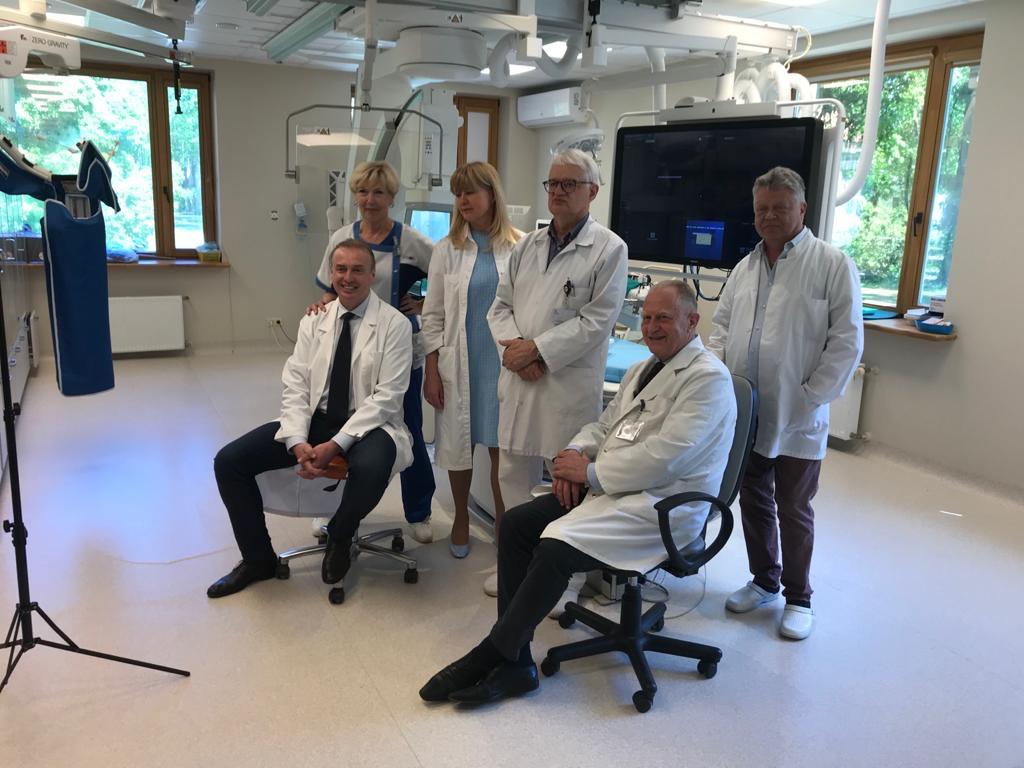
Prof. Lācis (seated, right) Together with his colleages at the Pauls Stradiņš Clinical University Hospital
What do you see as being the role of artificial intelligence in medicine?
We will inevitably move forward and increasingly use artificial intelligence (AI) in medicine. To a certain extent, this also reflects the desire to reduce the human factor, as people get tired, make mistakes, and sometimes miss nuances, whereas algorithms are able to work consistently and quickly. I have heard, for example, that AI can already analyse X-ray images with very high accuracy and can provide convincing conclusions.
However, the essential question remains, which must not be lost in the enthusiasm for a new technology: if an error occurs or damage is caused to a patient, who bears the ultimate responsibility?
I believe that the final say should always be given by a human, who should also assume responsibility.
You describe learning as a process. What should be improved in it?
People learn at home, at school, at university, and if they are doctors, then also learn during their residency. After that, learning continues throughout their lives. I have a dream that knowledge is transferred faster, in a more concentrated manner, but in reality, this process is slow and requires discipline.
What do you wish for RSU medical students and future doctors?
I wish for students to maintain a genuine respect for people and never lose the curiosity that drives them forward, even when they are tired and overworked. I wish for their knowledge never to become merely a set of formal grades or protocols but rather to transform into a way of thinking where they always seek the cause, evaluate nuances, and take responsibility for decisions.
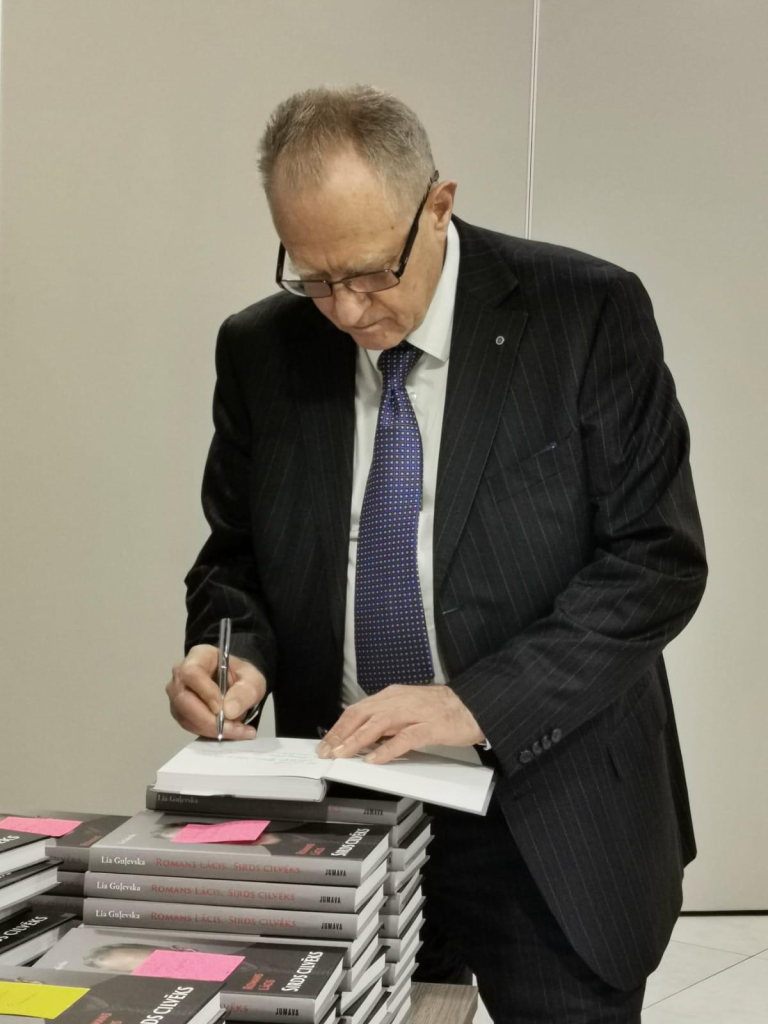
Prof. Lācis signing copies of Lia Guļevska's book
I wish that prospective doctors would remember that a patient is not just a diagnosis or a series of test results, but a person with fears, hopes, and their own story worth listening to, because often the conversation itself holds the key.
For more information about the life and views of this outstanding cardiac surgeon and professor, see the book by Lia Guļevska Romans Lācis. Sirds Cilvēks.
Related news
 Piecing fractured bones back together: Dr Raitis Turkins on residency training in Jelgava RSU in the news, Residents' Stories, Graduate Medical Training, Interviews


