From top to bottom or from neighbourhood to Europe? RSU studies public involvement in decision-making


In April 2025, the Horizon Europe funded programme, EU Decarbonisation in Times of Crises: Exploring Social Innovations and Enhancing an Equitable Twin Transition (DeCrises), was launched. The project, which will run until 2028 with a budget exceeding two million euros, brings together nine partners from across Europe, including Finland, Norway, Germany, Poland, Slovakia, Lithuania, and Latvia. Its objective is to study and improve multilevel governance in order to more effectively manage the so-called twin transition towards a greener way of life and a digitally advanced economy.
The Rīga Stradiņš University (RSU) team, led by researcher Vineta Kleinberga, is responsible for the first work package, the development of the theoretical framework. In addition, RSU researchers are conducting a case study on Riga in cooperation with the Riga Neighbourhood Alliance. As the researcher points out,
the project’s aim is not only to describe processes from a scientific perspective but also to give the public the opportunity to feel more heard and participate in real change.
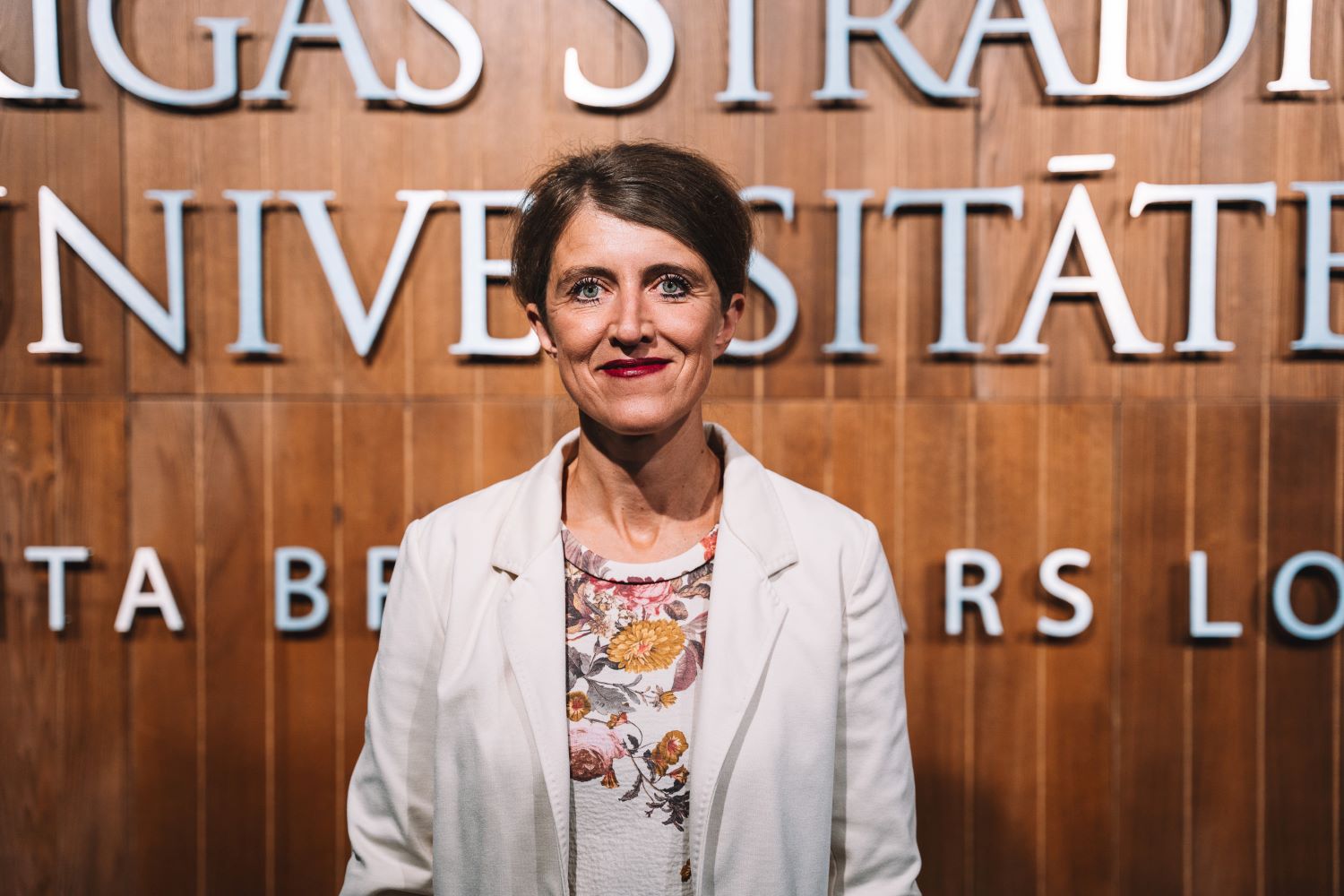 Vineta Kleinberga. Photo: Courtesy of RSU
The project is both international and operates on multiple levels. How would you describe its core purpose?
The project began in April 2025 and will continue until April 2028. It involves nine partners – eight academic institutions and one organisation responsible for communication and the dissemination of results. The lead partner is the University of Jyväskylä in Finland. The overarching goal is to understand how to successfully manage both the green and digital transitions, collectively known as the twin transition, within the European Union. The project explores how governance processes can be improved to make them more inclusive and equitable.
What exactly is "multilevel governance," and why is it important in the context of this project?
It means governance that operates at different levels – from the EU, national governments, and regions to municipalities, businesses, and citizens. Currently, the system often functions in a top-down way, and the public involvement is frequently formal.
The aim is to develop a new model in which the voice of society and local communities plays a greater role, as they are the ones most directly affected by changes and also key drivers of innovation.
What is the role of the RSU team in this project?
RSU leads the first work package, which focuses on the theoretical framework. Using the EU integration theories, we identify gaps in the theoretical understanding of the EU multilevel governance and develop the conceptual foundation for the entire project. We collaborate with the University of Greifswald in Germany, which examines the legal framework and decision-making processes.
In parallel, we are conducting a case study on neighbourhoods in Riga, working closely with the Riga Neighbourhood Alliance. This approach allows us to combine theoretical insights with practical experience.
Will the study on Riga be visible only at the national level?
No! The study of public engagement covers Latvia, Finland, Norway, and Poland. We will compare the challenges and solutions related to how society is involved in the green and digital transitions.
Riga will be analysed not only by our team but also by other project partners. In addition, international workshops are planned, where representatives from different countries will share their experiences.
How does the collaboration with international partners work?
Each partner is responsible for their own work package. RSU leads the theoretical part. Meetings are held regularly, mostly online so far. Almost every Friday, online discussions are held. However, in-person meetings are also planned, e.g., the project opening ceremony already took place in Jyväskylä, a mid-term meeting is scheduled in Riga in October 2026, and the project’s concluding meeting will be in Gdansk hosted by the Polish partners.
What research tools are used?
Initially, we analyse scientific literature, documents, and legal acts. This is followed by expert interviews, focus groups, and workshops with stakeholders.
At the end of the project, we will also use the Delphi method, where experts evaluate scenarios over several rounds and arrive at practical, implementable solutions.
Who are the members of the RSU team in Latvia?
Our team includes Assoc. Prof. Kārlis Bukovskis, specialising in international relations, and Assoc. Prof. Dina Bite, working in sociology. Two doctoral students and lecturers are also involved: Kristīne Blumfelde-Rutka, from the field of economics and business, and Inguna Potetinova, specialising in anthropology. The project also has the RSU administrative support. Also, we work closely with external partners, including Mārtiņš Jansons from the Riga Neighbourhood Alliance.
Why are these four countries chosen – Latvia, Finland, Norway, and Poland?
This idea came from our previous collaboration when studying energy issues in the Baltic Sea region. We wanted to continue this partnership, which was why we selected countries from this region: two from the north (Finland and Norway) and two from Central and Eastern Europe (Latvia and Poland). This allows us to compare different experiences.
What are the main deadlines?
The project will run until April 2028. The final outcome will be recommendations for policymakers at both the national and European level.
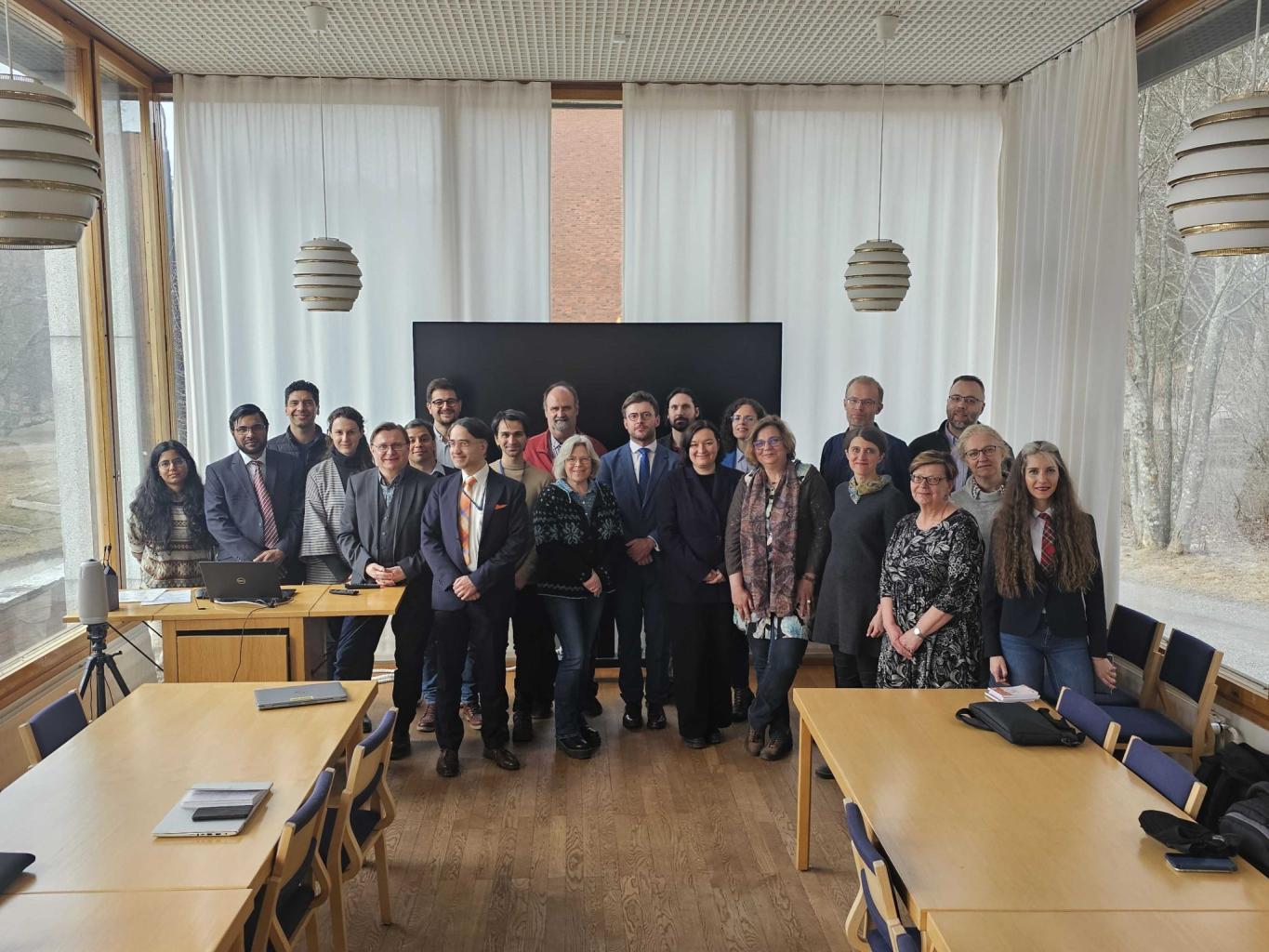 Participants of DeCrises at their first meeting. Photo: Courtesy of the project
You often emphasise public engagement. What does “meaningful engagement” mean?
Often, the public is invited to consultations or discussions, but there is no real return. Our goal is for citizens not only to participate but also to see that their opinions are taken into account and lead to tangible results. This involves feedback. Additionally, we want communities to be able to organise themselves, create social innovations, and rely less on the state. This brings long-term benefits for society itself.
How do you personally see the significance of this project?
It is an attempt to create a fairer and more inclusive governance system. If the public does not see any impact, disappointment and alienation from politics arise. When people see that their voice can make a difference, trust and willingness to get involved come instead. This is very important both in Latvia and across Europe.
The project is funded by the European Union under grant agreement No. 101177807, DeCrises. The views and opinions expressed are solely those of the authors and do not necessarily reflect the views of the European Union or the European Research Executive Agency. Neither the European Union nor the granting authority is responsible for them.

Related news
 Feminist Investigations Research Group Joins Latvian Research & Innovation Partner Catalogue 2026Research