
RSU researchers and industry representatives seek solutions to promote public trust in the media


Based on the results of qualitative audience research, researchers from Rīga Stradiņš University (RSU) organised co-creation events in Latvia and Estonia at the end of October. Together with representatives of the journalism industry, they developed recommendations for media professionals and media policymakers aimed at reducing the gap between the media and society and promoting public trust in the media.
The co-creation events were organised and led by RSU researchers Anastasija Tetarenko-Supe and Mihhail Kremez. They took place within the framework of the research grant Making Sense of Media: A Non-Media-Centric and Open-Ended Approach to the Study of Media-Related Experiences and Perceptions.
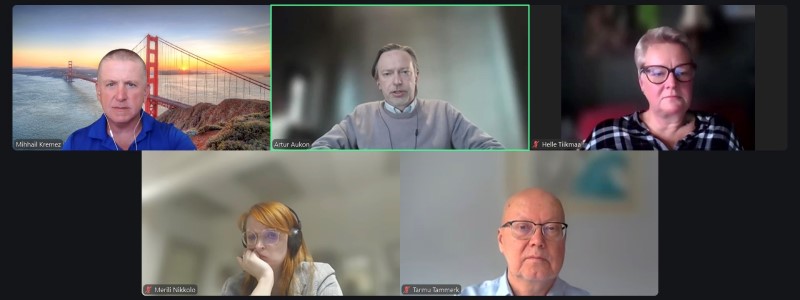
From the top left: Mihhail Kremez, RSU researcher, Artur Aukon, Media and Communication Expert at the National Centre of Defence & Security Awareness, Helle Tiikmaa, President, Managing Director and Project Manager of the Estonian Association of Journalists. On the bottom left: Merili Nikkolo, Chairman of the Estonian Press Council, Tarmu Tammerk, Media Ombudsman at the Estonian Public Broadcasting Company.
Grant Manager Jānis Juzefovičs emphasises:
‘This spring, we conducted extensive qualitative audience research in Latvia and Estonia to better understand how public attitudes and perceptions of the media and journalism are formed.
Based on this data, we prepared recommendations for media professionals and media policymakers to help reduce the public’s increasingly negative attitudes towards the media and journalism. It was important for us to involve the industry representatives in this process. Normally, we provide recommendations to the industry and policymakers as part of our research projects, but this time we wanted to engage the industry representatives already at the stage of developing the recommendations, thereby ensuring a closer link between research and professional practice.’
Having received feedback from industry representatives, RSU researchers will continue refining the recommendations over the coming months. These will be presented to media editors and policymakers in both countries at the end of the year, after which they will be made available to the wider public.
The research grant also includes the creation of the Media & Society podcast series, which serves as another means of promoting interaction between the academic and professional communities.
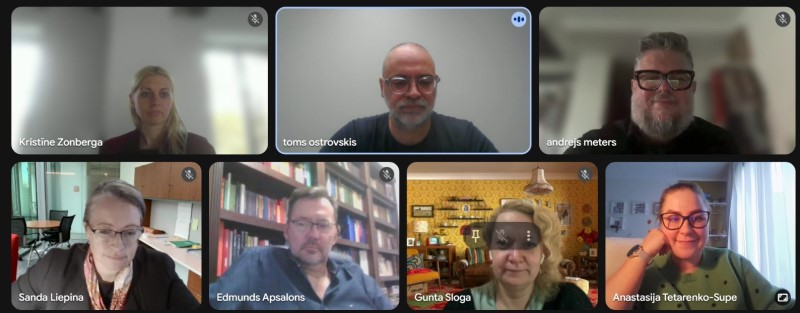
From the top left: Kristīne Zonberga, President of Civic Alliance–Latvia, Toms Ostrovskis, Board Member of the Latvian Association of Journalists, Andrejs Mēters, Chair of the Latvian Media Ethics Council. From the bottom left: Sanda Liepiņa, Director of the Centre for Public Policy Providus, Edmunds Apsalons, Ombudsman of the National Electronic Mass Media Council, Gunta Sloga, Director of the Baltic Centre for Media Excellence, Anastasija Tetarenko-Supe, RSU Researcher.
The activity is being implemented as part of the Scientist Grant Making Sense of Media: A Non-Media-Centric and Open-Ended Approach to the Study of Media-Related Experiences and Perceptions No. RSU-ZG-2024/1-0007, which is carried out under the project RSU internal and RSU with LASE external consolidation No. 5.2.1.1.i.0/2/24/I/CFLA/055. The project is financed by the investment of the European Union Recovery and Resilience Facility and the state budget.
Related news
 Feminist Investigations Research Group Joins Latvian Research & Innovation Partner Catalogue 2026Research


