
Challenging stereotypes about the profession of general practitioner. Interview with RSU doctoral student Ieva Griķe


Writer: Linda Rozenbaha, RSU Public Relations Unit
‘Various stereotypes continue to surround the profession of general practitioner, and these can influence the career choices of young doctors,’ reveals a large-scale study by Rīga Stradiņš University (RSU), which included interviews with students enrolled in the Medicine programme and an analysis of medical students’ attitudes towards the specialty of general practice, or family medicine. Among research group members is Ieva Griķe, doctoral student within the Social Sciences programme, Health Management sub-programme. She aims to challenge this stereotype and, together with colleagues, she uses the study to investigate the key barriers to attracting young doctors into general practice. The actual situation turns out to be much broader and more complex.
We are introducing doctoral student Ieva Griķe and her research.
At RSU, Ieva Griķe is not only a doctoral student: her professional career has been linked to the university at various stages – initially, she worked at the RSU Department of Doctoral Studies, later moving on to managing residency processes at the Department of Residency. She is currently the Director of the RSU Lifelong Learning Centre. Since 2007, her career has been focused on higher education and science, including at the Ministry of Education and Science.
Ieva Griķe’s first degree is in political science, and she holds a master’s degree in health management. Thus, the totality of her experience has laid a foundation for her to continue her academic path in doctoral studies, where she can combine her professional experience with her research interest in health policies.
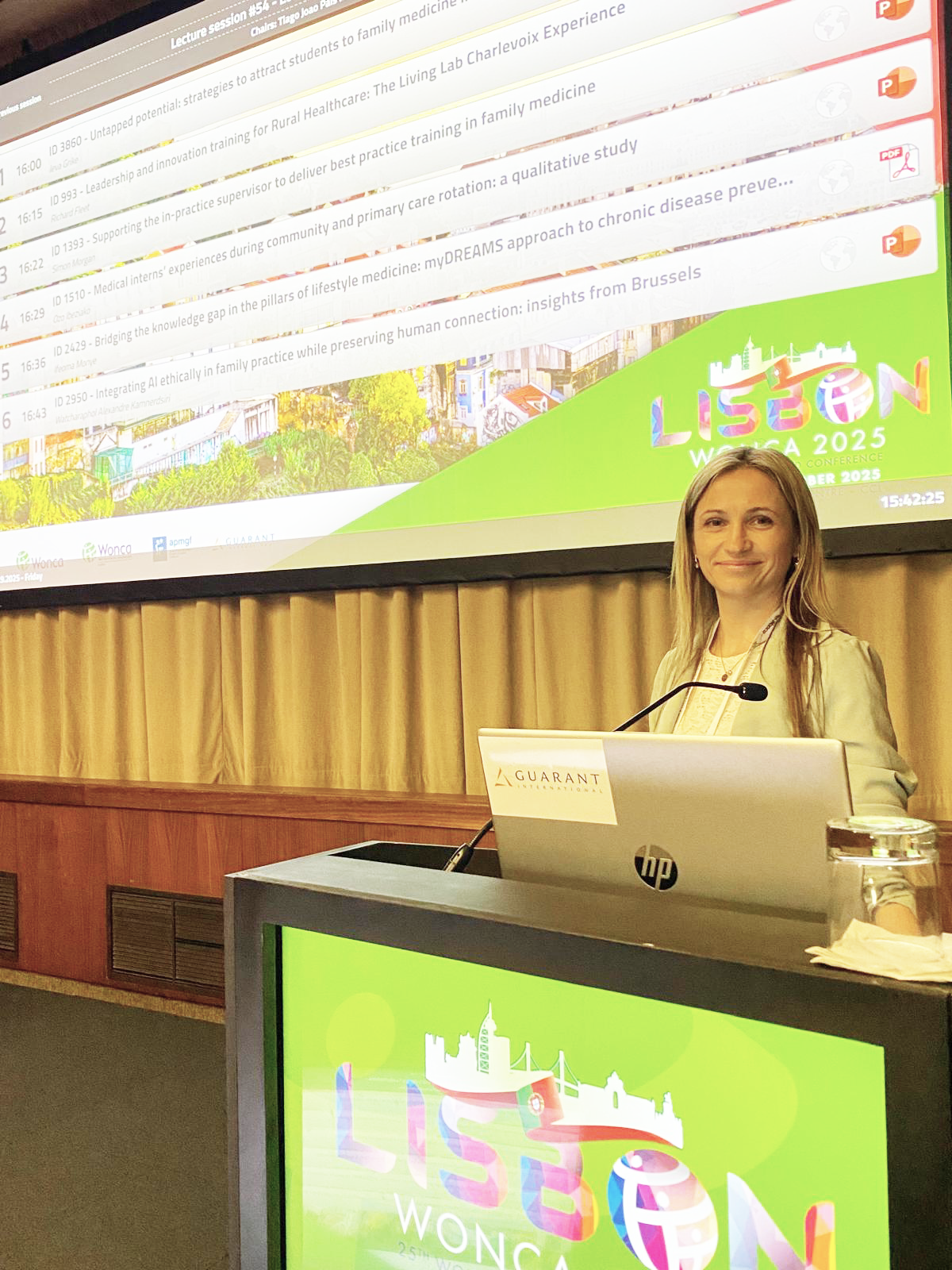
Your doctoral thesis is being prepared as part of the State Research Programme project Enhancing General Practitioner Resilience in Latvia: Challenges and Solutions. Why did you choose this area as the subject of your research?
In my previous job at the RSU Department of Residency, I planned and coordinated residency processes and the training of future specialists, and liaised with residency directors and health care institutions, covering a total of approximately 60 different residency programmes. In this role, I gained a good understanding of the challenges and difficulties of residency. Rīga Stradiņš University (RSU) and the University of Latvia (UL) jointly oversee residency admissions. As I was closely involved in the admissions process, I had a good grasp on the situation across Latvia.
Even then, it was clear that the country had a particular need for certain medical specialties, and in large numbers. At the same time, these are often not among the most popular choices for young doctors. The general practice specialty is among the less frequently chosen. A similar situation is also evident among internal medicine physicians (internists) and physicians in emergency medicine.
These specialties are very important for delivering primary care, yet students’ interest in them remains relatively low.
Our study once again demonstrated that this is not merely a matter of individual choices, but it is rather influenced by the overall organisation of the healthcare system, the work environment, the prestige of the specialty, and career prospects.
I had already started my doctoral studies, and the topic I had originally envisaged was broader, generally related to medical specialties facing shortages of physicians. The Ministry of Health announced the aforementioned project focusing on the factors that specifically influence the recruitment of students into general practice and their retention. The work involved in this study aligns perfectly with my professional experience and education, as it is a crossover between my knowledge of political science and health management.
The study is comprehensive. Which part of the study were you involved in?
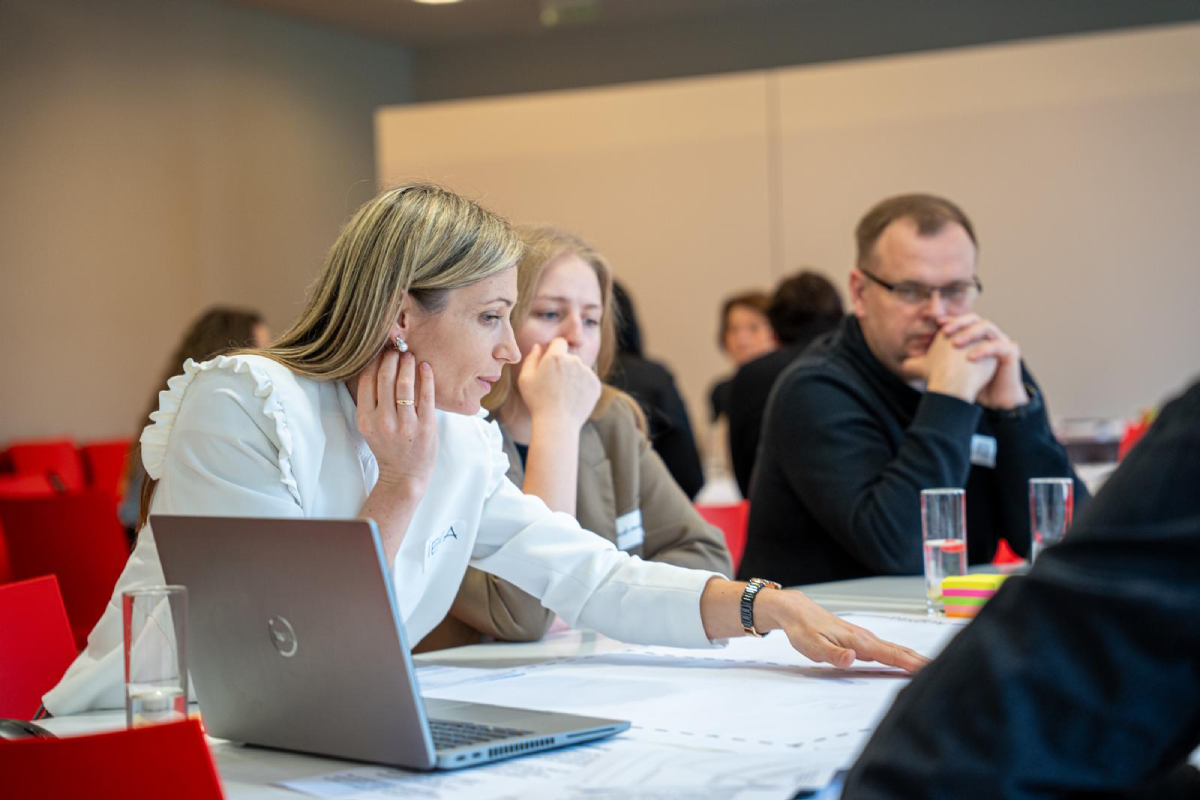
The study is currently in its final phase. I was primarily involved in two work packages: examining external environmental factors related to student recruitment and the retention of young doctors, and developing recommendations for improvement. What did we do? We examined the regulatory framework governing the recruitment and retention of general practitioners. We interviewed government institutions and municipalities, as well as professional associations, to understand their assessment of the situation and the key measures used for improvement. We also reviewed scientific literature: what is being done around the world regarding this matter, what works and what does not, and what the governments, municipalities, and universities are doing. In Latvia, two universities – Rīga Stradiņš University and the University of Latvia – train future physicians. Among other aspects, we examined how early in the curriculum students are exposed to family medicine, as study findings indicate that the motivation to choose this specialty often develops in the early stages of studies.
In the second work package, colleagues in social anthropology interviewed both students and medical residents, as well as early-career general practitioners. It was important to understand their perspective.
Jumping slightly ahead, before we discuss the study findings in detail, what surprised you personally in the findings? And what changes could we make to increase the number of new general practitioners and keep them in the job?
On the one hand, both the state and the universities are already doing a great deal to address the issue. On the positive side, the problem has been explicitly identified.
However, in reality, there is very often no funding for the planned activities.
The study revealed that the main challenge is not only a lack of funding, but
a recurring challenge is the lack of coordinated actions and a clear long-term plan – many institutions are active, but the measures implemented do not always add up to a coherent system.
Current efforts are fragmented – one person does one thing, another does something else… We lack oversight and a coherent, systematic vision to ensure that all activities have long-term impact.
If you had to promote the General Practice residency programme to final-year Medicine students now, what would you highlight?
Interviews with medical students revealed assumptions that a general practitioner’s work is primarily associated with administrative duties and referrals.
In fact, it is a very broad specialty with extensive opportunities for professional development in the clinical field. For example, modern technologies are increasingly being integrated, and general practitioners are using ultrasound more frequently.
Family medicine may appear deceptively simple; in reality, it is among the most demanding fields. To excel in it, one must master a very broad spectrum of medicine, including dermatology, internal medicine, cardiology, otolaryngology, and other areas. Moreover, the study shows that young doctors highly value the working environment – the team, professional support, and the opportunity to work in a modern general practice setting. Therefore, in many countries, general practice is organised as team-based care rather than individual practices.
If you were appointed Minister of Health tomorrow, what changes would you make to general practice?
Our study shows that young doctors make decisions not only about their specialty, but also about their lifestyle, which includes the work environment, the team, the region, the administrative burden, and long-term security.
The first step would be to establish a structured and supportive primary care model in which the general practitioner does not feel isolated.
This can be achieved by establishing a predictable and well-coordinated primary care model in which continuity of care, teamwork, and practice support are ensured at the system level rather than left to individual initiative. This would also entail a clearer collaboration framework between the state, municipalities, and other institutions involved in the process, enabling the long-term strategic planning of general practitioner recruitment and retention.
Let's turn to your doctoral studies. What are they like, and what do they require of a person?
Nothing shocking: doctoral studies require a great deal of self-discipline. What you get back depends on how much you invest. There is a lot of independent work.
How do you maintain self-discipline?
I’ve had mixed success. I remember, one of the lecturers in doctoral studies classes shared her approach to self-discipline: she made sure to set aside around 40 minutes each morning for research work, namely, for writing various research papers. For short periods, I can manage to be inspired by it and stick to this principle, but then “life happens” and throws me off track. It has certainly been valuable to be involved in a research project as part of an entire team, as project deadlines are motivating and, through team discussions, we can better define research questions and interpret results.
Has the research paper also led to any international collaborations or participation in conferences?
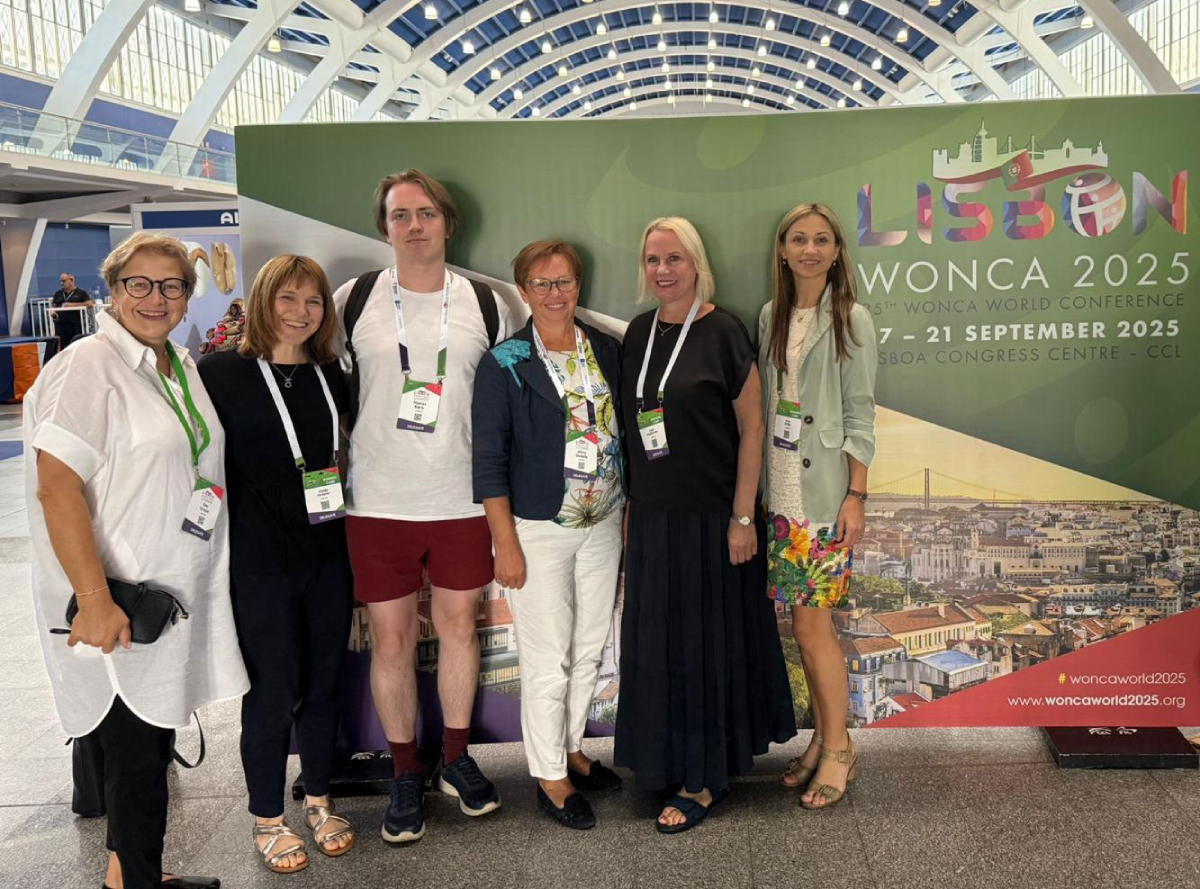
We have presented the project results at two conferences for general practitioners. One was the conference of the European Rural and Isolated Practitioners Association last summer, and last autumn we attended the congress of the World Organization of Family Doctors. It was a very interesting experience to realise how many people are conducting research in general practice and what they are studying. We reviewed various clinical studies and research dedicated to strengthening the profession, for instance, how family medicine is positioned as early as the undergraduate curriculum. We came to understand that our challenges are not unique – many face very similar issues. At the same time, there are countries where these matters are better organised and more “mature”.
Which countries are those, and what can we learn from them?
We can learn a great deal from the United States and Canada. Since the 1960s and 70s, universities there have systematically considered how to engage students in primary healthcare, particularly in general practice, during their studies. For instance, many medical schools are implementing so-called longitudinal learning pathways, educational models where students are attached to a single primary care practice or community for an extended period, they do patient follow-up over time, and concurrently learn across different clinical disciplines. This provides a much clearer understanding of what a general practitioner’s work entails and often also influences their choice of specialty.
While preparing the literature review for the study, I was struck to find that the issues we face in Latvia today, such as recruiting young doctors into primary care, were already being addressed systematically in these countries more than fifty years ago. Meanwhile, in Soviet Latvia, physicians' career paths were largely determined administratively: newly qualified doctors were simply assigned to work in specific locations after graduation.
At RSU, you also head the Lifelong Learning Centre. Could you tell us more about that?
We are currently expanding our lifelong learning offer by developing new programmes across a range of fields, including social sciences and digital transformation. We are also developing micro-credential programmes that allow you to learn new skills needed in the labour market quickly and flexibly. In the university context, micro-credentials are important because they allow learners to acquire specific competences and enhance professional knowledge in a focused format without enrolling in full study programmes.
Considering international trends, I believe these programmes will become a very important tool for lifelong learning at the university, as they enable a rapid response to labour market shifts and offer more flexible learning opportunities for professionals across various sectors.
I believe that the Lifelong Learning Centre should increasingly serve as a place where people can easily return to the university at different stages in order to enhance their knowledge, retrain, or acquire new competences.
What would you recommend to those still deciding whether to pursue doctoral studies?
My advice would be: don’t be afraid! Doctoral studies open up new horizons and opportunities – there is no doubt about it!
Related news
 Piecing fractured bones back together: Dr Raitis Turkins on residency training in Jelgava RSU in the news, Residents' Stories, Graduate Medical Training, Interviews


