Dissertation on the Use of the NIRS Algorithm During Spinal Surgery


Patients undergoing spinal surgery experience various physiological changes in several organ systems while lying on their stomach, which in turn affect cerebral blood flow and oxygen delivery to brain tissue. This can lead to post-operative cognitive impairment, which often has long-term consequences.
The brain still remains the least monitored organ during surgery. The aim of this study was to evaluate cerebral oxygen saturation during spinal surgery with the patient lying in a prone position. A cerebral oximetry device was used to do this. The usefulness of a brain desaturation algorithm (NIRS algorithm) based on near-infrared spectroscopy was also evaluated in cases of decreased cerebral oxygenation. The author also evaluated the possible relationship of the algorithm scores with postoperative cognitive function.
 NIRS algorythm (Denault, 2007). Image from the dissertation by Sniedze Mūrniece
No postoperative cognitive decline was observed in two patients aged 54 and 57 years, in whom a critical decrease in cerebral oxygenation was prevented by using the NIRS algorithm. In contrast, a 24-year-old patient who was not treated according to the NIRS algorithm experienced postoperative cognitive decline.
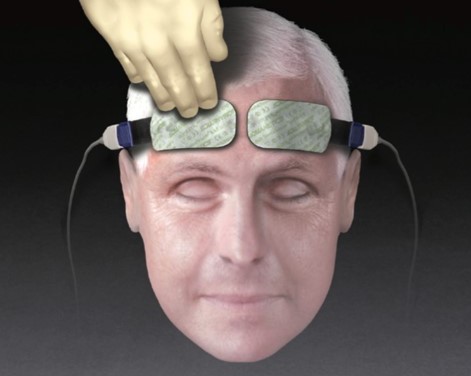 Cerebral oximeter electrodes. Image from the dissertation by Sniedze Mūrniece
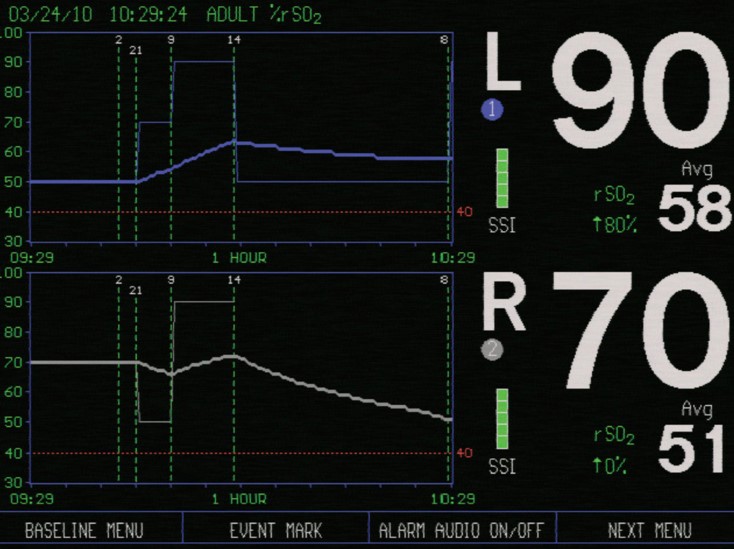
Cerebral oxygenation. Image from the dissertation by Sniedze Mūrniece
Overall, the study observed a correlation between intraoperative cerebral oxygenation values and patient age, intraoperative blood loss, preoperative mean blood pressure and preoperative cognitive assessment test scores.
Intraoperative cerebral oxygen monitoring in combination with the NIRS algorithm is important because it prevents desaturation or critical oxygen concentration in the brain during surgery and avoids postoperative cognitive impairment.
Clinical Algorithm Applicability During Spinal Neurosurgery and Postoperative Cognitive Decline” on 12 June 2023.
Read more