Reducing environmental impact and empowering people: Green procurements at RSU


Writer: Linda Rozenbaha, RSU Public Relations Unit
Photos: Courtesy of RSU
Rīga Stradiņš University (RSU) has identified sustainability as one of its core values. The University's green and socially responsible procurements are a practical demonstration of our commitment to these values.
We continue our series of articles on sustainability at RSU.
‘Green procurements mean that the purchaser has chosen products, services, or construction works with sustainability and environmental preservation in mind. It involves long-term thinking – how the product will be used, what the maintenance costs will be, how the generated waste will be managed, or what the lifecycle of a building will look like,’ explains Sabīna Bušmane, Manager of the Procurement Unit at RSU (pictured).
“Green” public procurement is a process in which public institutions aim to purchase goods and services that have a lower environmental impact throughout their life cycle compared to goods and services with the same primary function but acquired through different procurement principles. In the case of construction works, this approach also helps reduce environmental impact, promote social improvements, and generate long-term savings.

Bušmane agrees that, in essence, any procurement can be carried out as a green procurement by including requirements that demonstrate sustainability or even exceed them.
In line with its identified needs and the specifics of each procurement subject, RSU implements strategic procurements whenever possible. This includes the acquisition of goods, services, and construction works with the lowest possible environmental impact throughout their life cycle, by carrying out green public procurement in accordance with the Public Procurement Law and the Cabinet of Ministers Regulation of 20 June 2017*.
‘The Cabinet of Ministers Regulation defines mandatory categories where the contracting authority must carry out green procurement, as well as provides for recommended categories where there is an option to choose additional “green” elements,’ the expert adds. ‘At RSU, we primarily operate within the framework of the mandatory requirements, for example, mandatory criteria are included in the technical specifications.
But there are also construction projects where we go beyond what the Cabinet Regulations require.
For instance, in the Pharmaceutical Education and Research Centre on Konsula iela, we not only followed the basic requirements but also applied green criteria to procure sustainable furniture.
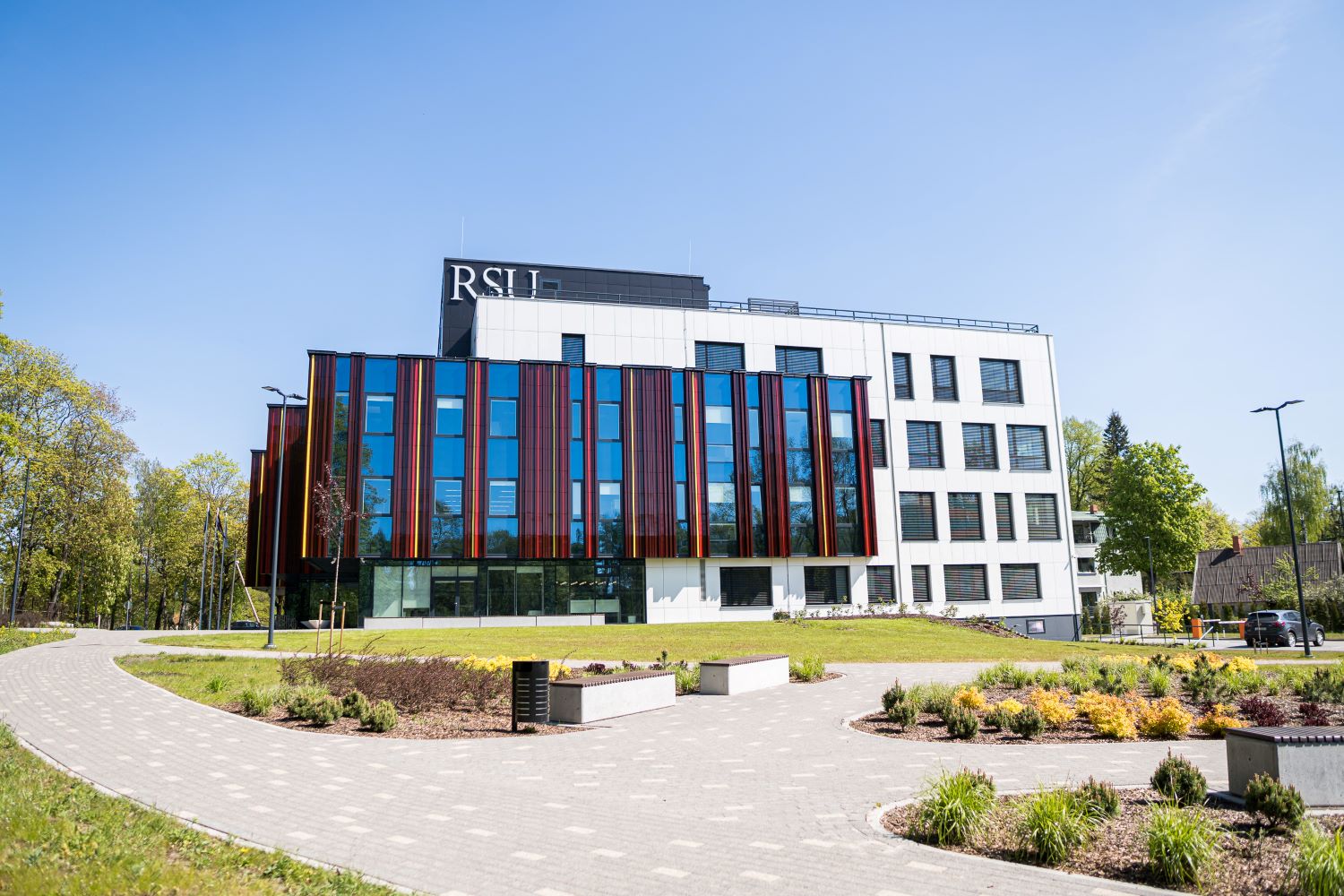
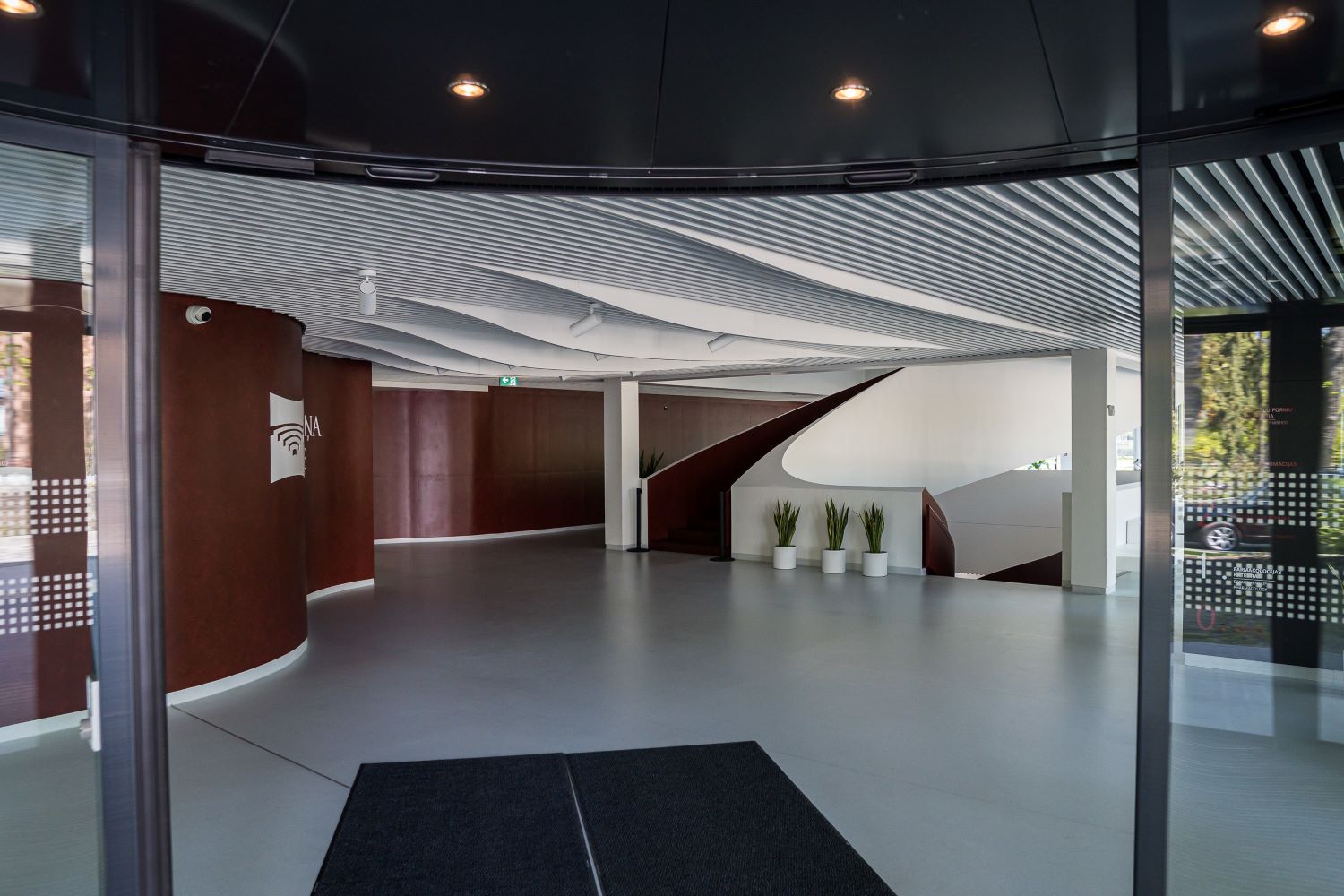
The RSU Pharmaceutical Education and Research Centre
As part of this project, 15% had to be allocated to green public procurement, but it was not specified exactly for what. We decided to include construction materials as part of that share. In the cost estimate, we identified items to which green procurement criteria could be applied, for example, materials with eco-labels. In addition, there was a separate procurement for furniture, which was also carried out following green public procurement principles,’ Bušmane recalls.
Within the procurement process, product sustainability must, of course, be documented. ‘For example, when selecting such furniture, we check whether the materials used meet green criteria such as the source of the wood and whether any prohibited substances are present.
In the case of sustainable furniture, additional factors are also considered, like whether the items are easy to disassemble and repair.
This ensures that, for instance, when moving to other premises, one can easily take the furniture apart and reassemble it, which means the furniture remains usable even if circumstances or premises change,’ explains Bušmane.
The delivery and installation of new furniture also generate a significant amount of waste -boxes, wrapping materials, etc. These aspects are considered when evaluating sustainability; therefore, factors related to delivery and environment-friendly packaging are also taken into account.
Ambitious sports complex project on Cigoriņu iela
A good example of green procurement at RSU is the large-scale construction of the University’s sports complex on Cigoriņu iela. This green project stood out due to the specific sustainability-related competencies required by the construction manager: ‘In every procurement, we go through the Cabinet Regulations point by point, to ensure compliance with the specific context.
For the project on Cigoriņu iela, we needed a chief construction manager with experience in implementing the demolition and construction waste management plans.
For example, experience in installing and dismantling temporary structures on construction sites was required, as well as documented data in energy efficiency and the installation of water-saving systems. Overall, we evaluated multiple sustainability-related aspects. What made this project unique compared to others, was the requirement for contractors to prepare a plan for implementing green criteria. Namely, there were clear green public procurement criteria, and we asked companies to develop a plan or at least to explain how they would meet those requirements. We requested documentation and measurements, so in a way, the contracting authority demonstrated how the process would be monitored to ensure compliance,’ Bušmane explains.
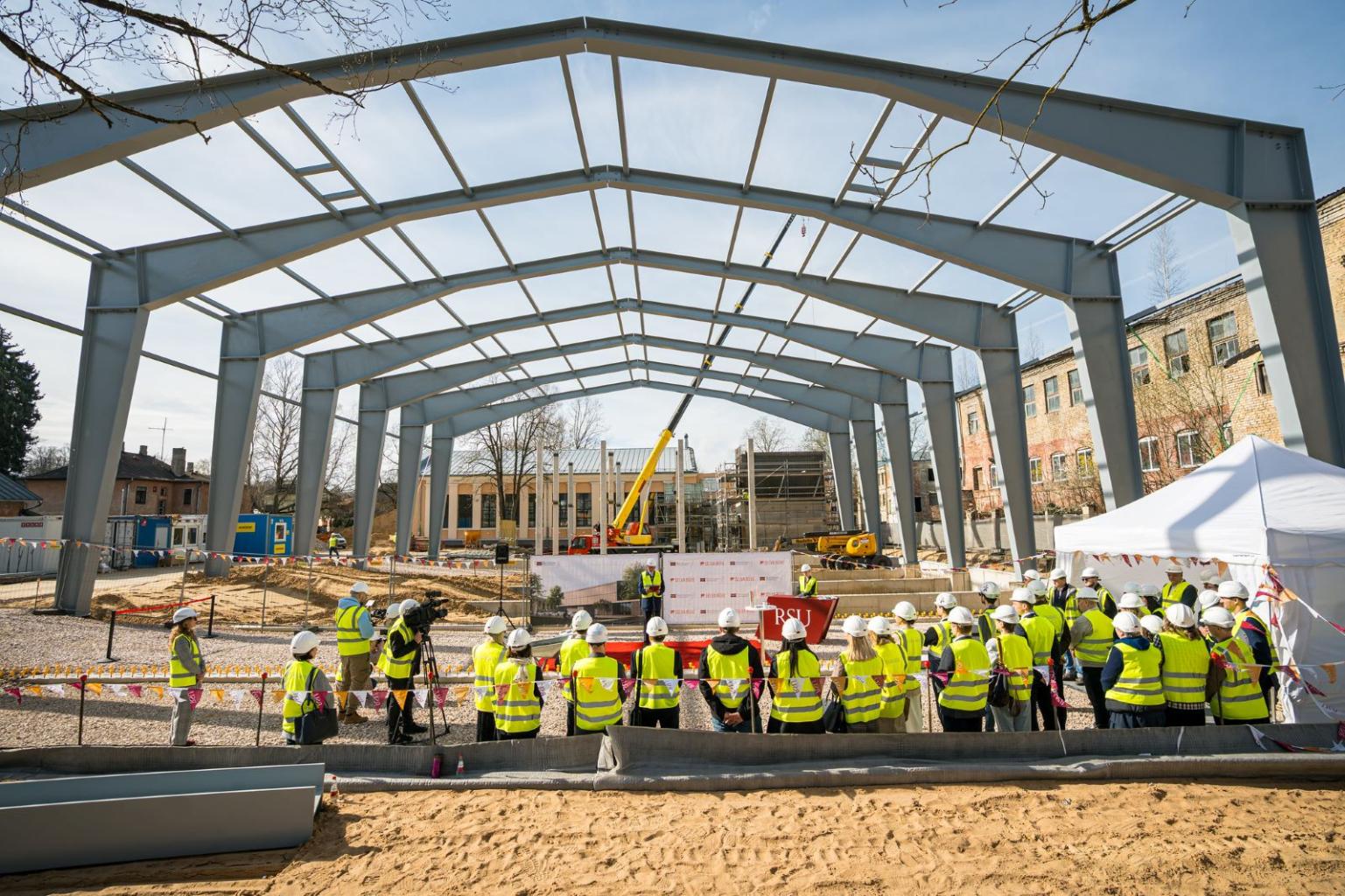
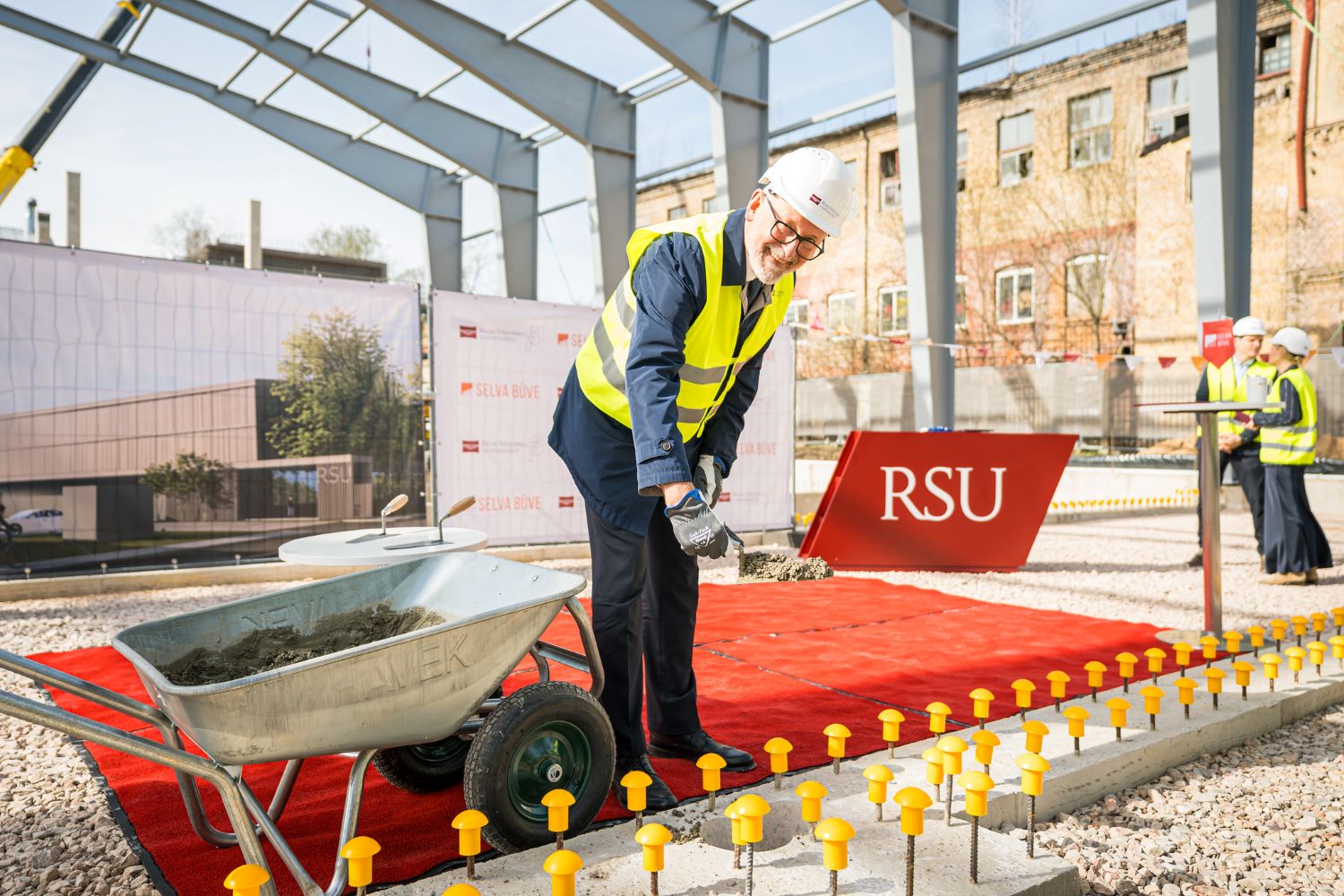
16 April 2025. Capsule laying ceremony at the new RSU Sports Complex on Cigoriņu iela
Service providers are becoming more prepared for green requirements
What are the biggest challenges in green procurement? ‘These days, most suppliers of goods and services understand what is expected of them. However, there have been isolated cases where proving the sustainability of a product has been more difficult. For example, products may lack certificates or documentation to confirm their sustainability. In Green Public Procurement, challenges have also arisen around verifying the experience of key personnel, such as the design project manager or construction manager for third group buildings. Early on, there were questions about how to prove effective waste management practices or experience in implementing water-efficient solutions – how to verify this information, which documents to assess, and how both the contracting authority and the supplier could align their understanding of what is required. It is more difficult in small service contracts, where the potential candidates may not be well prepared and they do not have as many specialists to collect the necessary information, but overall green procurement has gradually gained ground and the market has adjusted,’ says Bušmane.
In general, she believes that suppliers are now ready for the requirements of green procurements, as they have already adjusted their products and offers over the years to meet the needs of public procurement contracting authorities and the requirements set by law.
They have been practicing green procurement for years and are prepared for it. The requirements are also introduced gradually and are not a surprise for them.
Procurement is a competition based on price, and all bidders are interested in winning. However, if the choice comes down to two bidders of which one has a higher price but meets the green public procurement criteria and has a sustainable proposal, and one that fails to meet the criteria but offers a lower price, it is the one that fulfils the criteria that is more likely to win.
‘We focus on sustainable solutions, as one of the University’s core values is environmental preservation.
Procurement requirements reflect the contracting authority’s goals. When we talk about green public procurement, we are talking about strategic procurement, and I am fully convinced that strategic procurement can only exist if the contracting authority itself has a strategy. We have our own vision and strategy, and we invest resources and knowledge in implementing this strategy, including through procurement. We are consciously developing procurement requirements to ensure long-term benefits; the University has truly accomplished a great deal in this regard,’ Bušmane concludes.
* The Cabinet of Ministers Regulation No.353 ‘Requirements for Green Public Procurement and Procedures for the Application Thereof’ for the following procurements: copying paper, imaging equipment, computer hardware and information and communications technology infrastructure, food and catering services, cleaning products and services, indoor lighting, new construction, rebuilding, designing, and demolition of third group buildings, purchase of passenger cars and light commercial vehicles, etc.