RSU is growing and developing: major reconstruction underway in the main building


Rīga Stradiņš University (RSU), like the city of Riga, will never be ready – it is in a state of continuous growth and change. Currently, construction work is taking place at several RSU sites, including the main building at 16 Dzirciema iela.
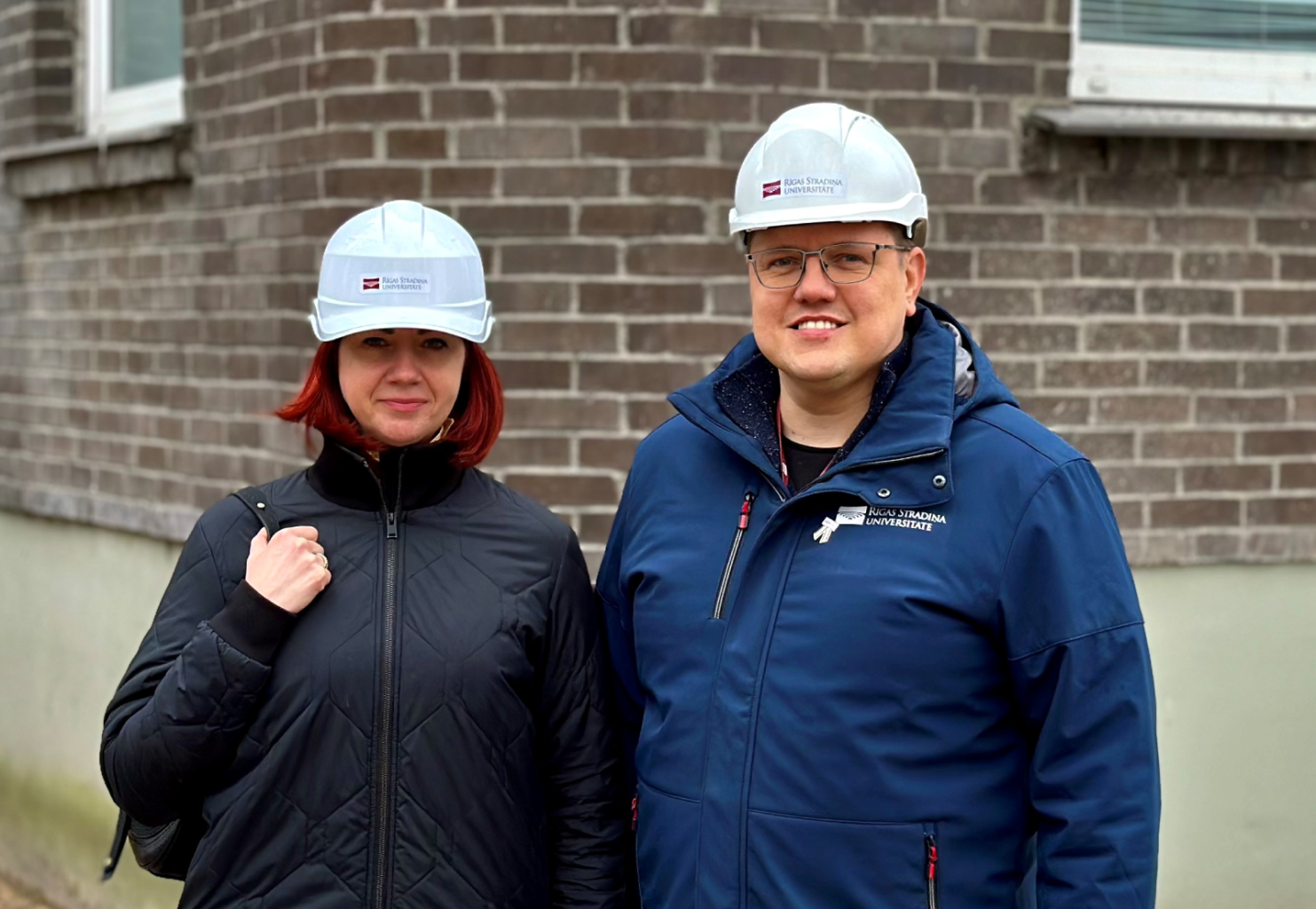
We asked Aigars Jankevičs, Manager of the Construction Project Unit at the RSU Department of Infrastructure, and Vita Mitrofanova, Construction Project Manager (pictured), to tell us more.
Why is the RSU main building undergoing reconstruction?
Jankevičs: The second, third, and fourth floors of Blocks D and G at 16 Dzirciema iela had not undergone any major renovation since the building was constructed in 1987, and they were still retaining repair features carried out in the Soviet-era and in the 1990s. The premises lacked centralised ventilation and air conditioning, the water pipes and sewage systems were worn out with outdated power supply, low-voltage and security solutions. The library also had long-standing issues with its roof that regularly leaked. The library’s first floor was renovated in 2016, but the refurbishment of the second floor, improvement of the book storage facilities, and modernisation of student workspaces had been repeatedly postponed.
Considering the deterioration of the facilities and the need to provide a modern study environment, the RSU Rector’s Office approved the reconstruction plan for Blocks D and G in October 2021. Detailed construction design and procurement began in 2022.
What will RSU gain after the reconstruction?
Jankevičs: By the end of the reconstruction in spring 2026, RSU will gain more than 2,700 m² of fully renovated space, which will be technically and functionally adapted to modern requirements.
The second floor of the library will feature a larger book storage collection, open access to literature collection, and various work zones. The premises will be designed for reading, individual work, and group work, providing bookable rooms with modern equipment, silence booths, and soft furniture areas. The quiet reading room can be converted into a space for lectures or seminars for up to 20 people. The fully reconstructed lobby, featuring glass constructions, will allow more natural light, while new classrooms, a computer lab, and renovated library administration offices will also be created next to the library.
The third and fourth floors of Block D will feature a different design and more spacious rooms for the Human Resources Department, Finance Department, Academic Affairs Department, and other structural units. New and convenient IT customer service centre facilities will be created on the first floor near the library entrance. All necessary technical upgrades are planned – insulating the walls, replacing and insulating the roof, installing new windows and completely new ventilation and air conditioning systems. All rooms will have energy-efficient and automatically adjustable lighting, as well as solutions that improve acoustics and reduce noise.
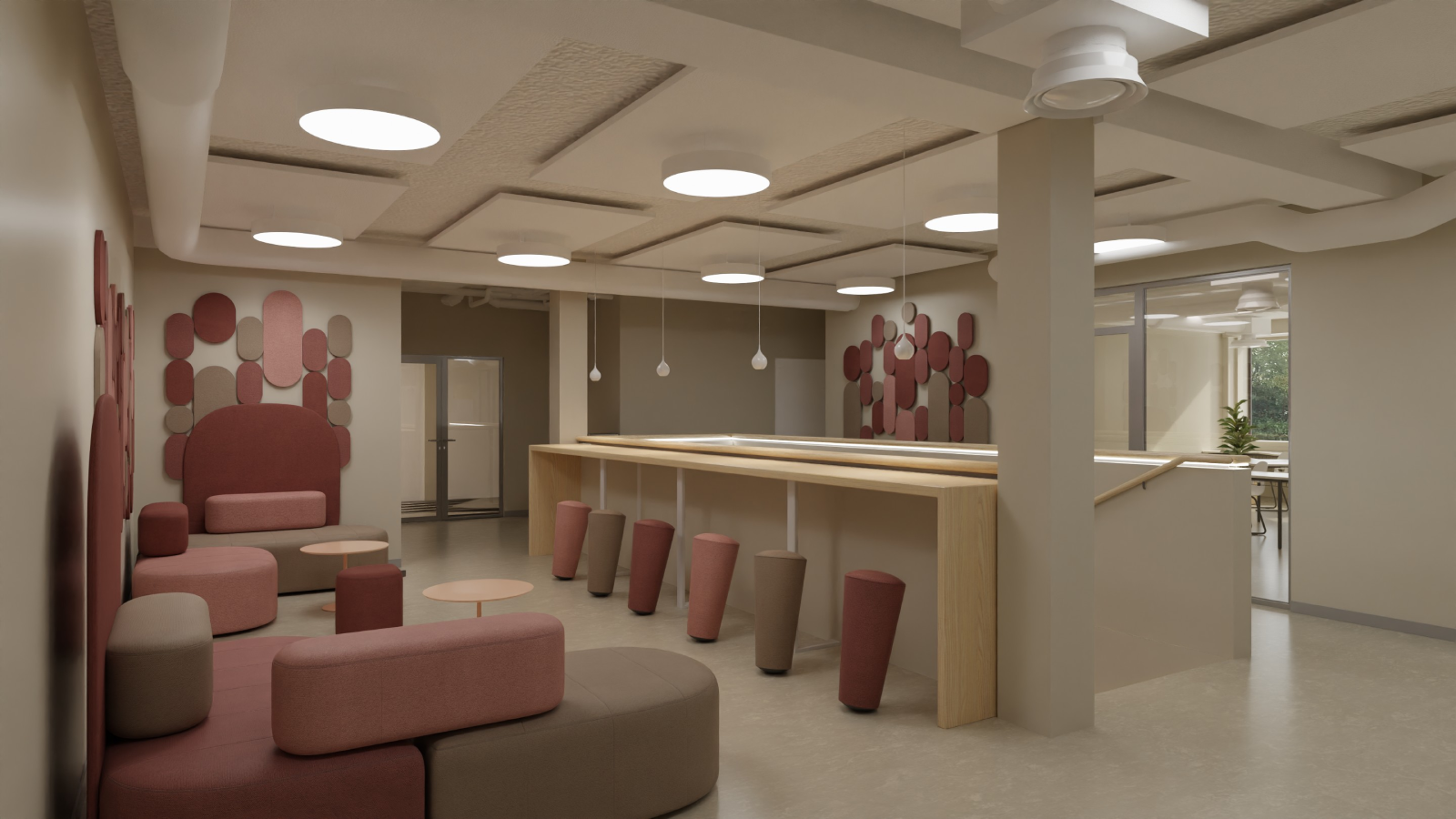
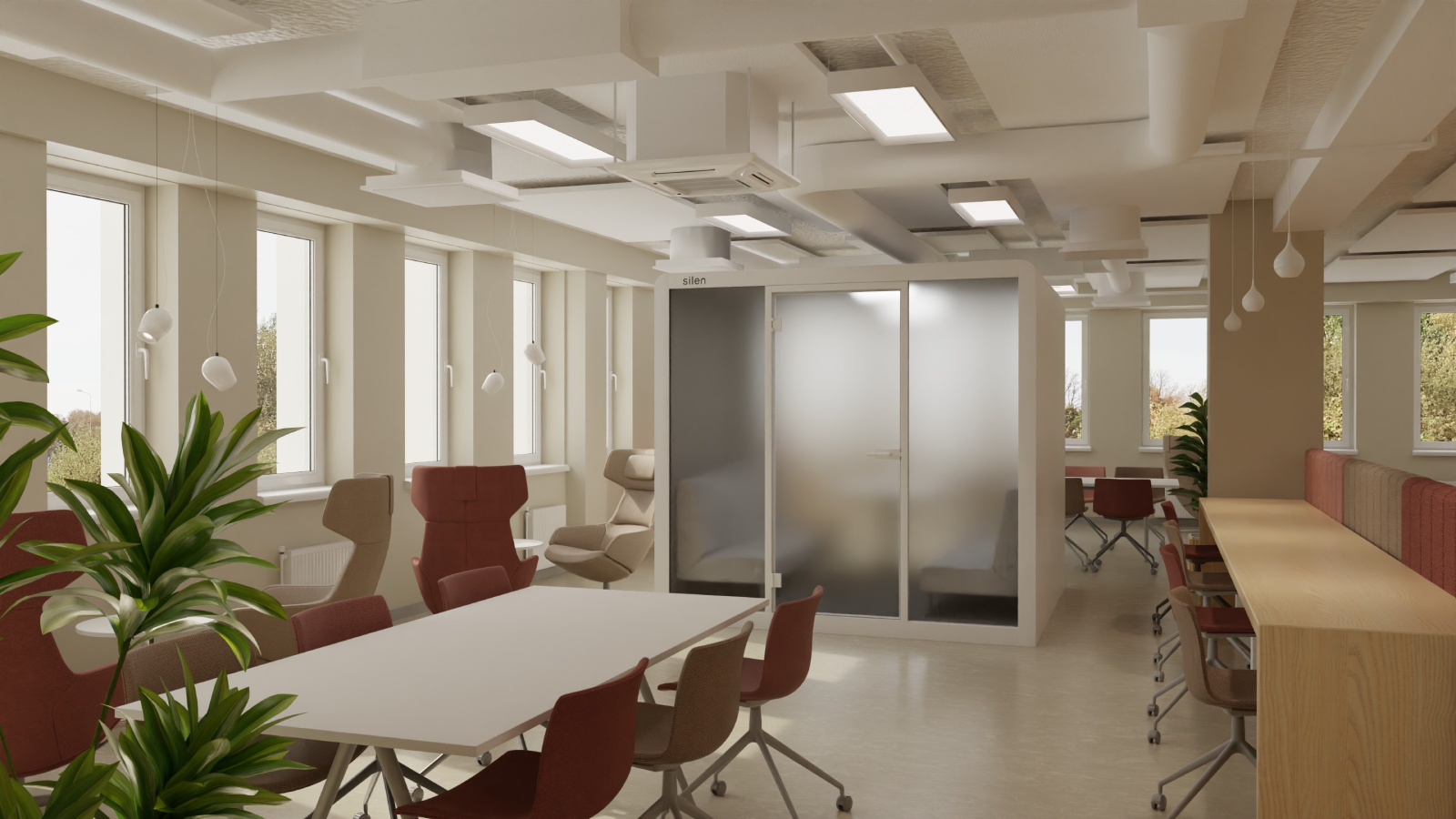 Visualisation of the Library in Block D
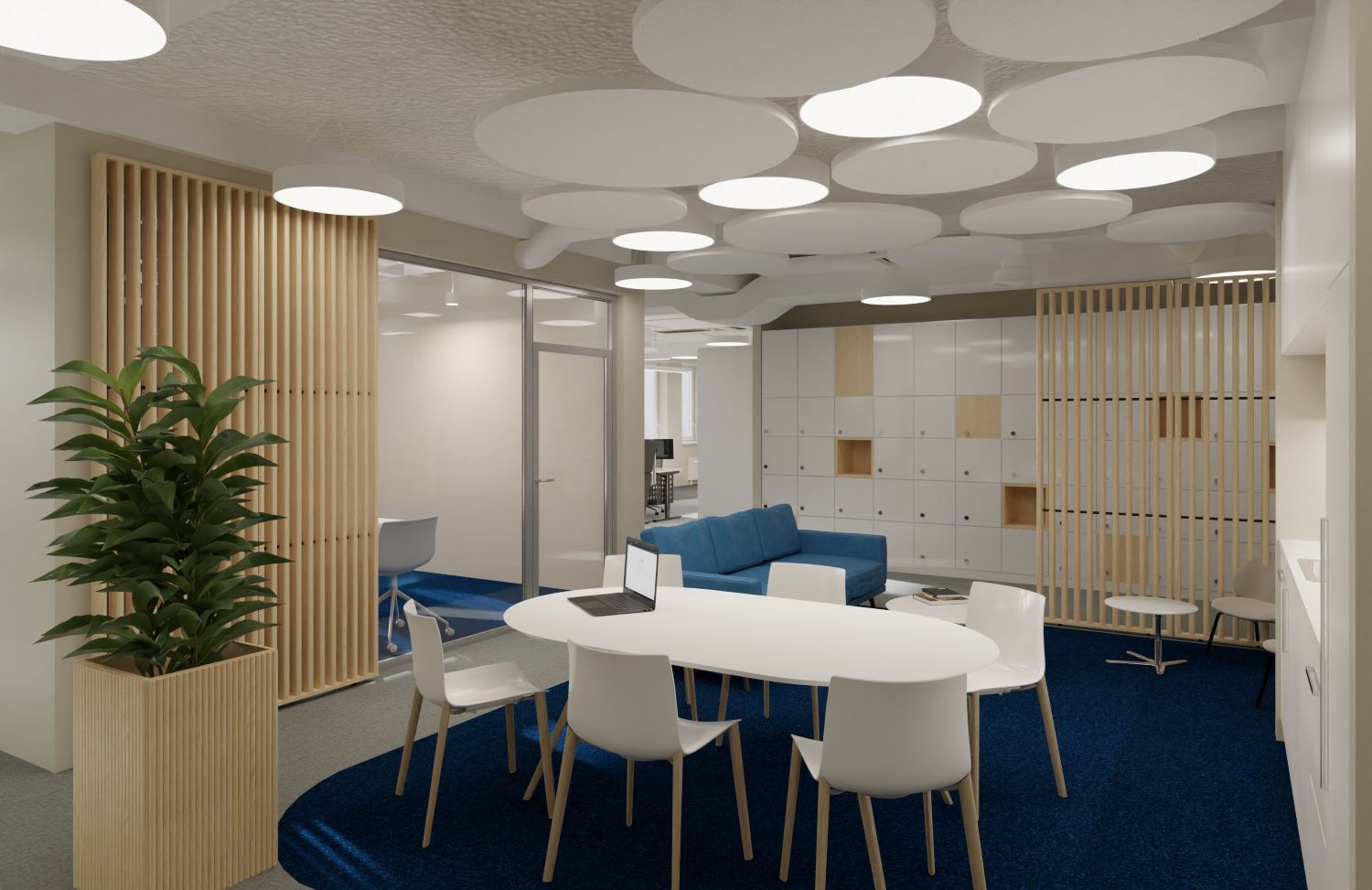 Visualisation of the third floor of Block D
What work has already been done and what still needs to be done?
Mitrofanova: The reconstruction of Blocks D and G and the furnishing of the premises will be completed in spring 2026. Some areas are already finished — in October, the Administration Office resumed its operations, and the library’s book collection has been moved to the new premises on the second floor of Block G.
On the third and fourth floors of Block D, the final finishing works are underway: carpeting is almost finished, acoustic panels and lighting fixtures are being set up, and by the end of the year, scaffolding will be removed from the facade of the building. Remaining tasks include the formal acceptance of the premises for exploitation and their equipment with furniture and technical equipment. The goal is to allow six to seven structural units, which are currently working in temporary premises on the RSU campus and elsewhere in Riga during the construction work, to return to the renovated premises in the spring of 2026.
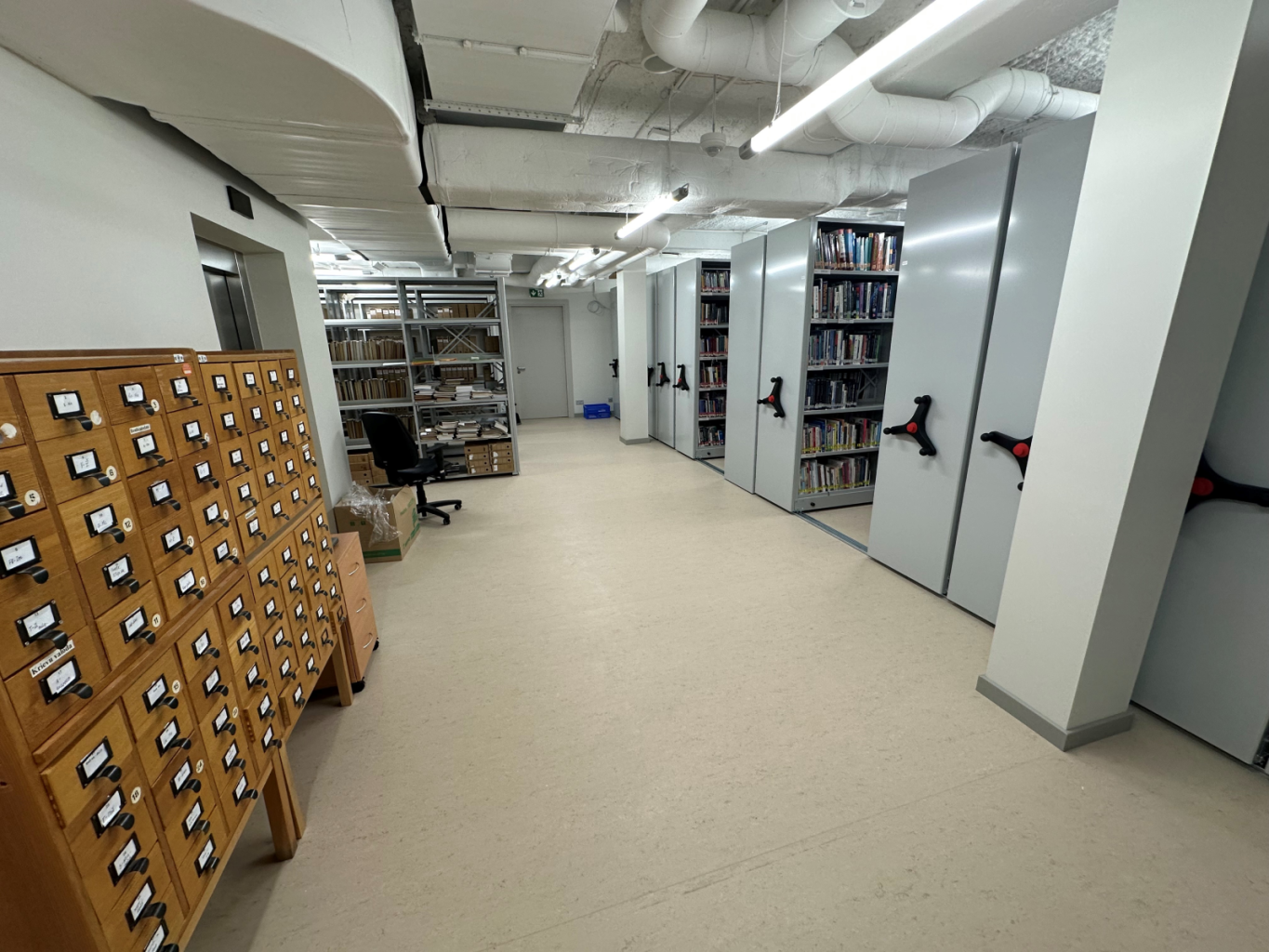
The library's book storage on the second floor of Block G
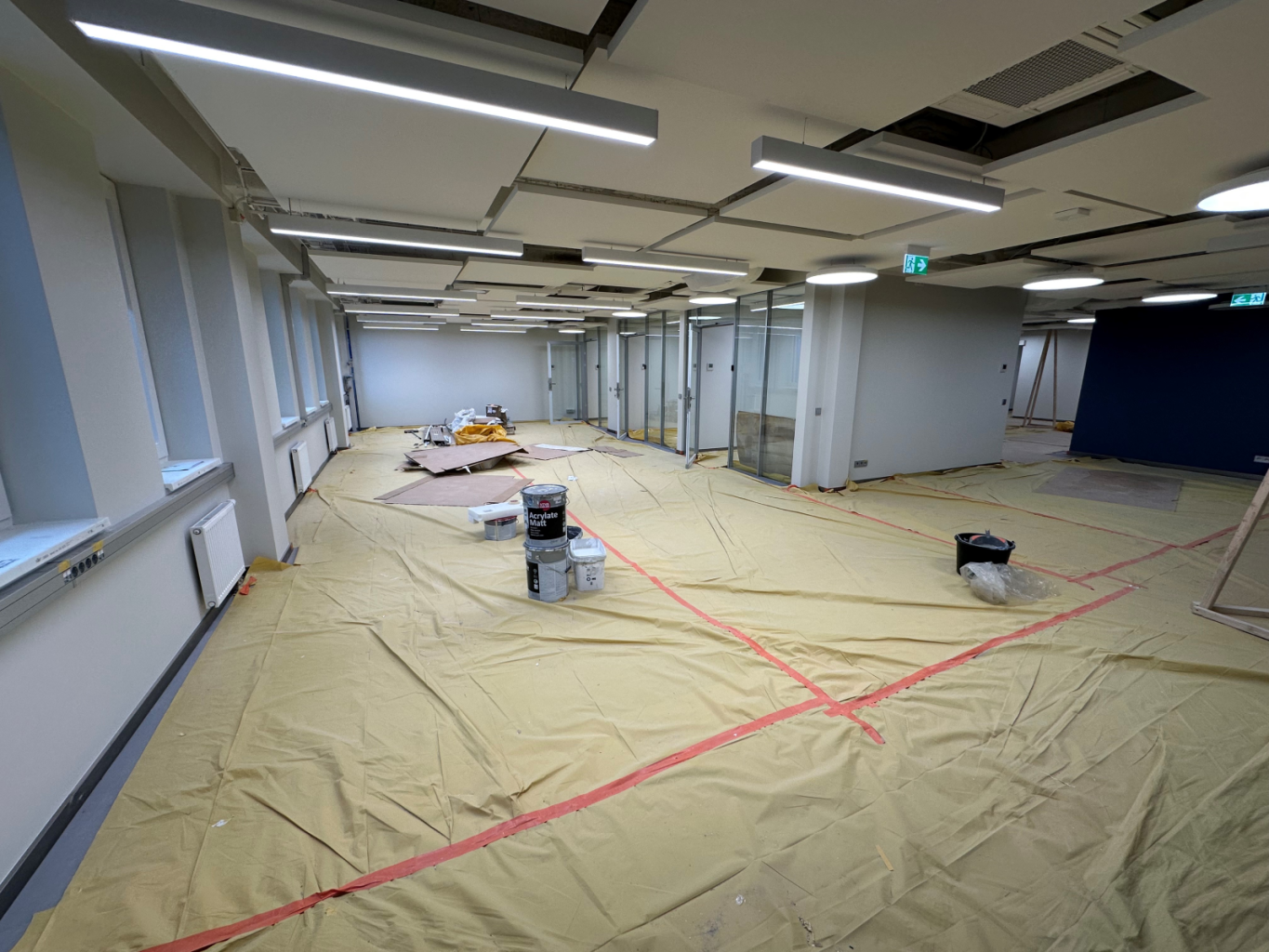
Construction on the third floor of Block D
Jankevičs: This year and in 2026, significant improvements are also planned in other sections of the main building. On the sixth floor of Block A, the premises for the Laboratory of Sports and Nutrition Research have been completed, and by the end of the year, on the first floor of Block K, the former museum premises will be renovated and opened as a service centre for international students.
In the summer of 2026, extensive reconstruction work will take place in the lobby and sanitary facilities on the first and second floors of Block K. The RSU History Museum collection located there will not disappear – it will be displayed in the lobby showcases for visitors attending events in the Great Hall, as well as those in the study areas. There will also be changes on the second-floor lobby, increasing the number of study furniture items popular with students.
Other major infrastructure improvements are also continuing. Next year, the European Union funds will be used to adapt Lecture Theatre 3 in Block C for group work, and by 2027, it will be more convenient and versatile in its use: instead of traditional rows of chairs, there will be terraces with mobile tables and chairs, as well as access to the latest generation digital technologies. Outside of lecture hours, the Lecture Theatre will be opened for student independent work.
From 2026 to 2030, RSU plans several significant changes in the main building: increased number of computer classrooms, improved functionality of other large lecture theatres and restroom facilities, and reorganisation of the central lobby area to reduce noise and crowding.
Along with the construction of the new building between the main building and the Institute of Stomatology, additional adjustments will be made in the areas that will be vacated after the relocation of structural units.
Significant outdoor improvements are also expected. In 2026, the RSU Inspiration Park is planned to be substantially expanded, and the area near Mazā Dārza iela will be upgraded by creating convenient pedestrian paths, recreation zones, lighting, information displays, parking lots with electric charging stations, and short-term parking lots for visitors and people with mobility impairments.
In the long term, the shortage of parking spaces on RSU territory will also be addressed by expanding the area in the direction to 1 Dārza iela.
At the same time, micromobility infrastructure will be developed, including cycle lanes to make it easier to reach RSU buildings at 26A Anniņmuižas bulvāris, 9A Kuldīgas iela, as well as the Anatomical Theatre.
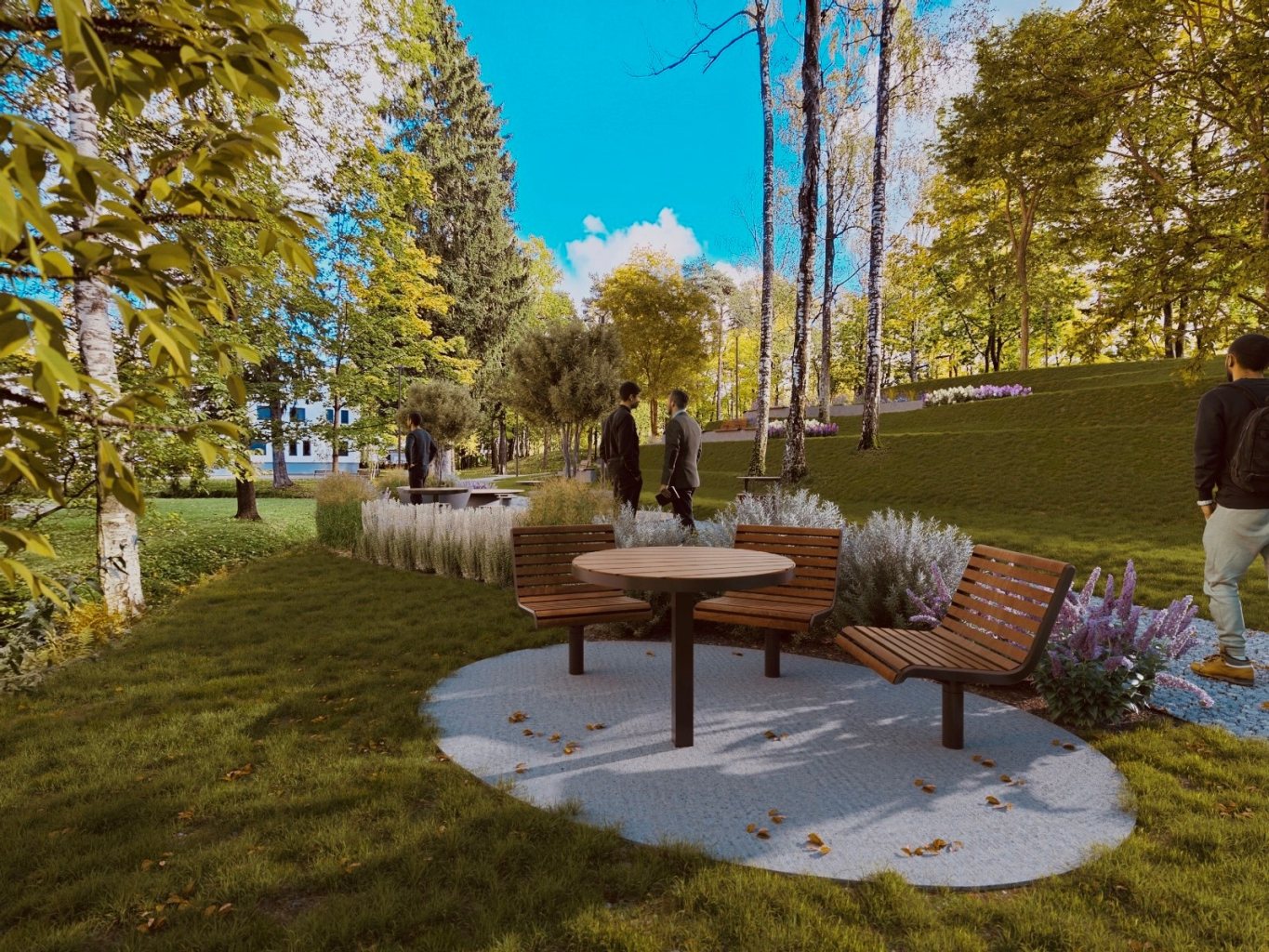
Visualisation of Inspiration Park
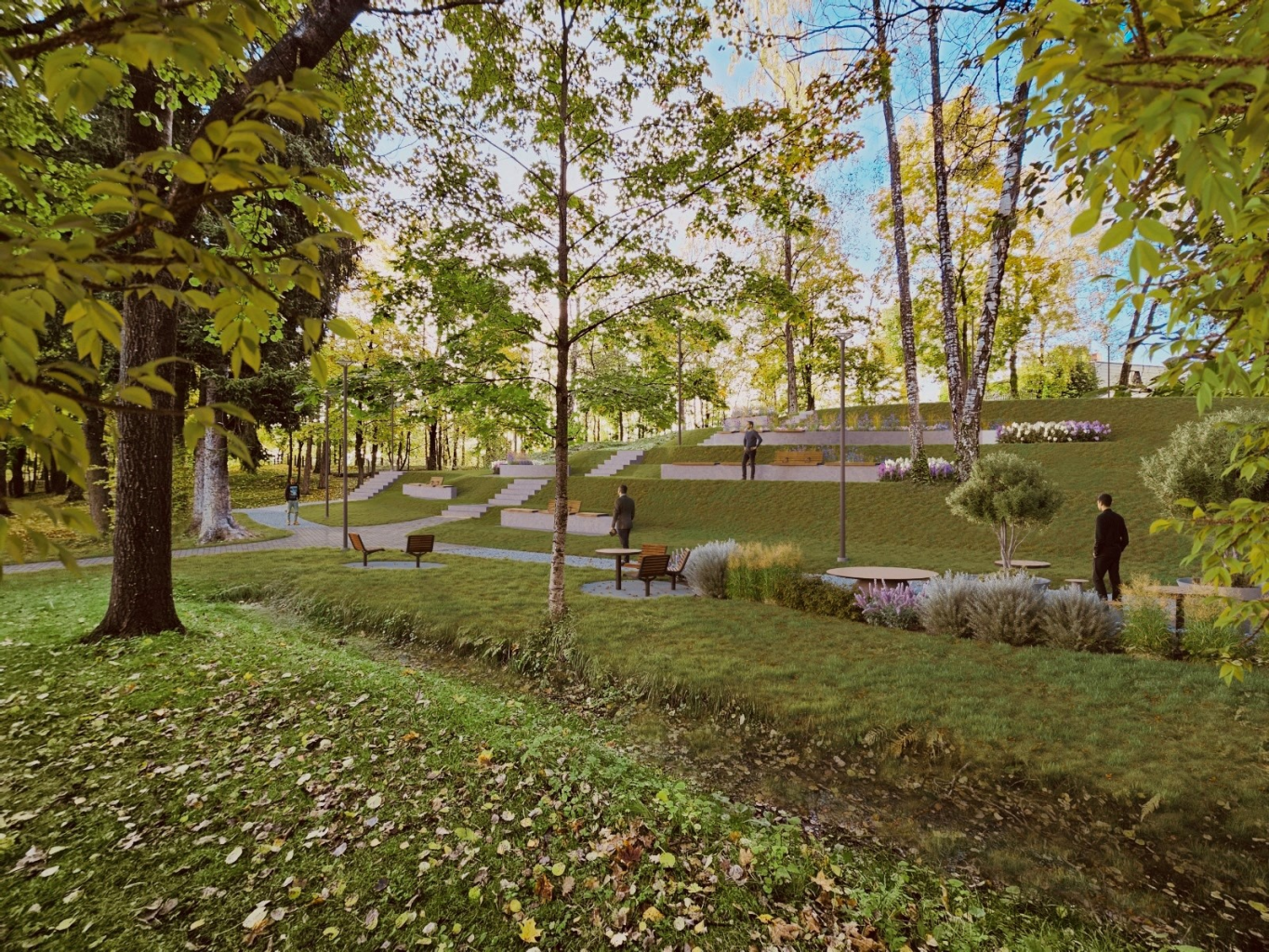 Visualisation of Inspiration Park
What are the biggest challenges in the reconstruction process?
Jankevičs: The last time construction works of this scale took place in the RSU main building was more than 10 years ago, when Blocks B and C were renovated in 2013-2014. This time, the challenge is particularly significant, as the reconstruction is taking place in the most actively used part of the building, where many structural units operate on a daily basis.
The construction work must be carried out as discreetly as possible so that the university can continue to function without major disruption. It could be compared to a precise, yet highly complex operation performed without anaesthesia.
Mitrofanova: One of the most demanding tasks was relocating the RSU central IT communications hub. Its position within the construction zone posed considerable risk – any interruption could have paralysed the entire RSU system. For this reason, the communications hub was transferred to another building in 2023-2024.
Another major challenge was how to protect more than ten structural units from the inconvenience caused during the reconstruction. Therefore, when we began planning, we decided on the relocation of structural units and temporary solutions. Several units were moved to temporary modular buildings next to RSU, as well as to other RSU facilities or rented premises elsewhere in Riga, while individual employees were offered the option of working remotely. The university prepared for the relocation for almost two years, carefully assessing several alternatives and adapting facilities.
The issue of the library’s collection was particularly complex, as it was physically impossible to move it to another location. To ensure that the library could continue operating while keeping the collection safe, the construction work was divided into several stages. The second floor of Block G was separated by a temporary wall, with the collection placed on one side and structural reinforcement for new compact storage shelves carried out on the other. For this purpose, a nearly two-metre-deep foundation pit was excavated in the central part of the building, exposing the foundation footings and enabling the construction of almost ten-metre-deep micropile structures to provide the necessary additional load-bearing capacity.
The roof replacement in Block G was another complex stage. It could not be dismantled in the traditional way, as the functioning library premises and collection were located directly beneath it. Therefore, a temporary roof was installed, and the works were carried out in several stages. The temporary roof span in the second stage was one of the largest in Latvia.
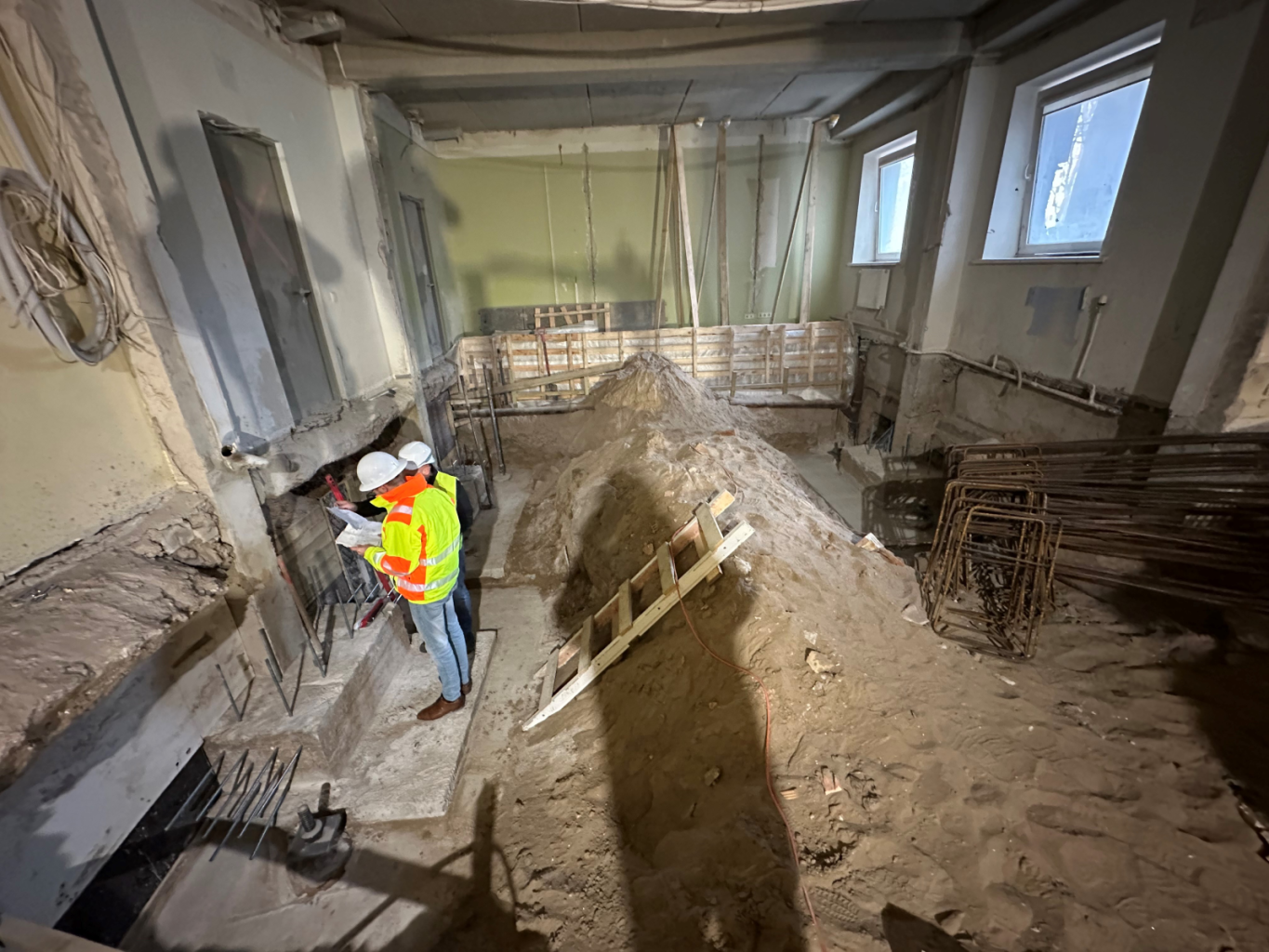
Reinforcement of building structures under the library storage room on the first floor
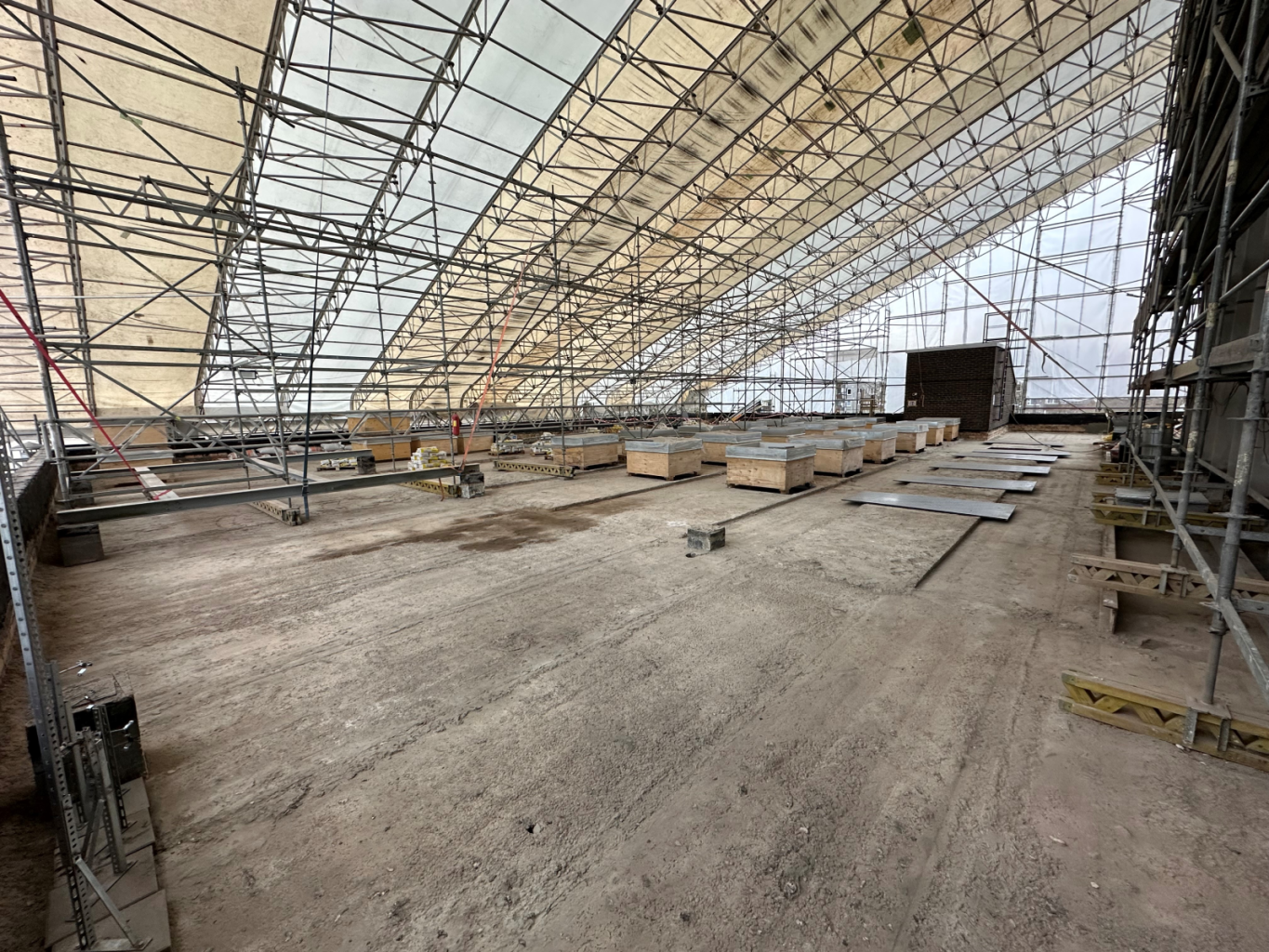 Changing the roof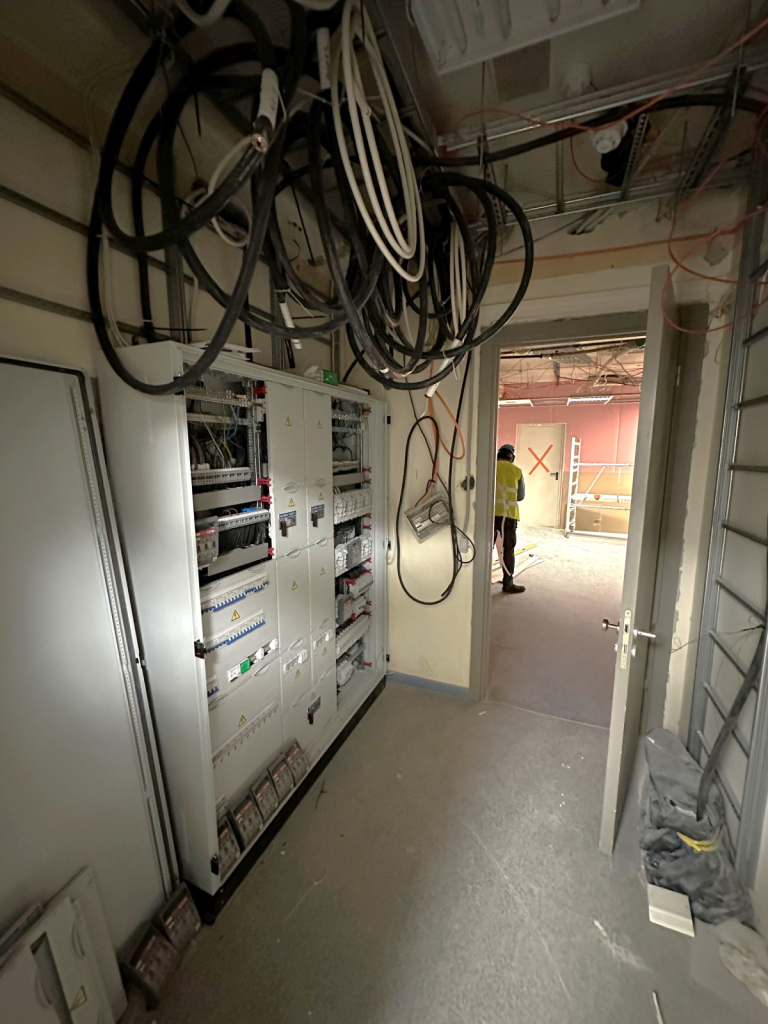
RSU main power distribution board
The reconstruction also included several major engineering network shutdowns – heating, water supply, low-voltage systems, and power supply. In summer 2024, the main power distribution board was replaced. All of this work was carefully planned to avoid prolonged disruption to the university’s operations.
Additional difficulties were caused by space restrictions, as the location of the construction site required a reduction in the number of parking spaces and changes to pedestrian traffic flows both inside the building and in the surrounding area. The situation was also complicated due to the extreme weather and flood of 2025, which led to a nation-wide state of emergency. This created a number of additional challenges for construction workers and construction supervisors. Combined, these factors extended the construction period by almost six months, but the additional solutions and measures implemented were essential to ensure the university’s continued operation and to protect its infrastructure, staff, and students.
I would like to thank the university’s staff and students for their patience and understanding during the construction works. Only with the determination and hard work of all our colleagues will the RSU infrastructure and environment become more developed and modern.
We would like to thank everyone involved in the implementation of the project for their significant contribution:
- Guntars Aizstrauts, RSU Computer Network Administrator, and Igors Maisaks, Security System Manager, for their work on transferring the central IT communications hub before the start of construction works in 2024
- Gita Garlo and Dainis Zemešs for their work on relocating structural units to other workplaces from the end of 2023 to the second half of 2024
- The RSU Building Management and Maintenance Unit team and Laila Skrodele, Head of the Unit, Aleksandrs Kočņevs, RSU Fire Safety and Civil Protection Specialist, Renārs Jakovickis, Head of Security at SIA Security & Consulting, and his team, Igors Maisaks, RSU Security Systems Manager, and Kaspars Strēlis, Construction Project Manager, for their close cooperation in planning the construction process and ensuring that all necessary safety requirements were met during the construction
- Andris Gudelis, RSU Chief Energy Engineer, and Andis Miončinskis, Head of RSU Technical and Transportation Unit, for ensuring the continuity of electricity, heating, and water supply systems
- Special mention should be made of those directly involved in the construction: the PS P and S Būvniecība teams, Construction Managers Andrejs Kalniņš and Aleksandrs Grigorjevs, Project Manager Kaspars Strēlis and Company Manager Juris Spīķis, SIA CMB designers and supervisors Zane Koroļa and Nauris Strika, Construction Engineer Kaspars Šņore, and other designers, Construction Supervisor of SIA Būvēlogs projekti Toms Kronbergs, as well as the RSU construction project management team, Vita Mitrofanova and Aigars Jankevičs