Social work students and teaching staff invited to participate in an international project seminar


From 10 to 12 November 2025, one of the main activities of the project 'Social Work History Re-examined – From a Shared History to a Shared Future' will be a meeting of students and professors from the partner universities at KSH München. The purpose of the meeting is to discuss and exchange knowledge about the history of social work, with the goal of developing a shared Baltic-German perspective.
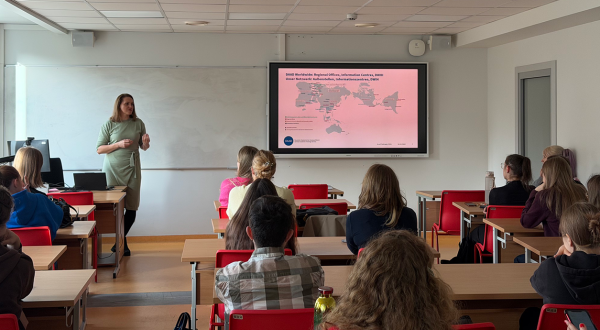
In October, several public meetings were organized with students and teachers from the partner universities to discuss the historical development of social work education. During these discussions, students expressed the view that social work, as an academic discipline, continues to face challenges in establishing its scientific identity.
In the Baltic states, social work is a relatively young discipline, still shaped by the tension between its post-Soviet legacy and the influence of Western, human rights–based approaches. In Germany, by contrast, social work has a longer historical tradition, with roots that can be traced back to the Bismarckian era. However, the impact of World War II also significantly influenced the evolution of social work, prompting reflection on hidden or neglected perspectives within the field.
Understanding the historical pathways of social work in both the Baltic and German contexts can help students and educators strengthen the discipline’s identity, enhance mutual understanding, and promote a more grounded and self-aware approach to social work education.
We warmly invite you to join our upcoming seminar dedicated to discussing the history and development of social work as part of the international project 'Social Work History Re-examined – From a Shared History to a Shared Future.' This in-person meeting will bring together students and professors from partner universities to exchange insights on the historical pathways of social work and explore perspectives that shape its future.
 rsu[pnkts]lv.
The Baltic-German University Liaison Office project is financially supported by the German Academic Exchange Service (DAAD) from the funds allocated by the German Foreign Ministry.