US surgeon and RSU Council Member Gundars Katlaps performs unique heart and liver transplant surgery


‘For us, it is important to help as many patients as we can, and to do so to the highest possible standard,’ says Gundars Katlaps, cardiothoracic surgeon at Tampa General Hospital (TGH) in Florida, USA. He is Head of the Aortic Surgery Programme and Director of the Lung Transplantation Programme at the TGH Transplant Institute. Katlaps is also a Council Member of Rīga Stradiņš University (RSU), an RSU graduate, and has had a long and distinguished career.
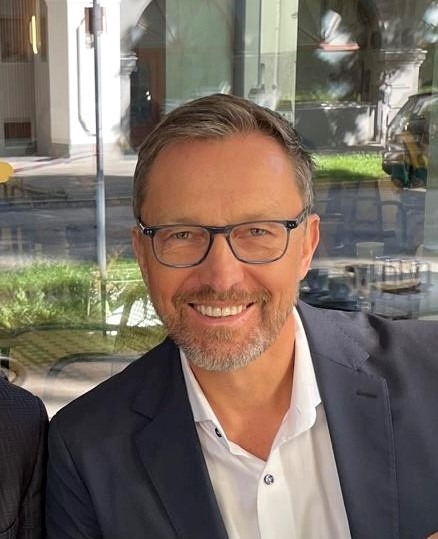 Publicity photo
He became a surgeon at Stanford, studied cardiac surgery at the Medical College of Virginia and Papworth Hospital in Cambridge, and has held senior positions at leading medical institutions in Virginia and Florida. In addition to his clinical work, he has been active in medical research and education, including managing a cardiothoracic surgery residency programme.
The surgical team at TGH is composed of highly skilled professionals who perform a high volume of transplant surgeries. In 2024, TGH ranked first in the United States for the number of transplants performed.
‘Practical skills and the number of surgeries performed build confidence and give you the courage to take on increasingly complex procedures,’ explains Katlaps.
Katlaps has performed numerous complex surgeries. In 2024, he was among the first surgeons in the world to carry out a transplantation of a beating heart. Another groundbreaking procedure performed by Katlaps and his team attracted widespread public attention earlier this year: on 31 May, they carried out the world’s first heart and liver transplant without the use of a blood transfusion. We invited the surgeon to share his insights into this surgery.
Could you tell us more about the surgery? How long did the preparation take, and how did the operation go? Do you believe such procedures could be carried out elsewhere in the world, including in Latvia? What conditions would need to be in place for that to happen?
The patient suffered from severe liver disease and critical coronary artery disease. After careful evaluation, we concluded that a combined heart and liver transplant would be the most appropriate course of treatment. However, the patient’s religious beliefs did not permit the use of blood transfusions. His convictions were so strong that he preferred to risk death rather than accept a transfusion. This significantly complicated both the planning and execution of the operation, as various blood components are normally essential during and after surgery. Erythrocytes are required to supply oxygen to the body, while platelets and plasma are crucial in preventing post-operative bleeding. Therefore, prior to surgery, we had to optimise the patient’s ability to produce erythrocytes and improve his overall health condition.
The surgical team did not require any special preparation for this surgery. The skills and experience that surgeons acquire over the course of their careers are crucial — without them, no amount of short-term preparation would suffice. Both Kiran Dhanireddy, the liver transplant surgeon, and I have extensive experience in performing transplants and operating on patients who decline blood transfusions. In this case, we had to draw on both types of expertise in a single procedure. In bloodless surgery, it is essential to operate quickly and with precision to minimise blood loss. This approach benefits all patients, not only those whose religious beliefs prohibit the use of blood transfusions.


Gundars Katlaps with his colleagues during the surgery. Publicity photo
The surgery was very successful. First, my assistant and I transplanted the heart. Once that was done and we understood that the heart was functioning, and the sutures were not bleeding, we invited the liver transplant surgeons to transplant the liver. For safety reasons, we closed the patient’s chest only after the liver transplant.
The patient recovered very well. On the same day, we were able to disconnect him from mechanical ventilation, and three weeks after the surgery, the patient was discharged.
The world’s first heart and liver transplantation was performed 40 years ago. As we only learned after our surgery, we were the first in the world to carry it out without the possibility of a blood transfusion or its components. Apparently, for 40 years, surgeons had considered the risks of such a surgery to be too great. This highlights both the complexity of the procedure and the continuous development of medicine and surgery.
Surgeries like this can also be performed elsewhere in the world, including in Latvia. Experience is required to optimise the patient’s chances of survival.
I am glad that we can not only save people’s lives but also give them the opportunity to live a full life. Recently, my patient Sarah Housman, who underwent a repeated double lung transplant two years ago, won a bronze medal in swimming at the World Transplant Games in Germany. This is truly inspiring!
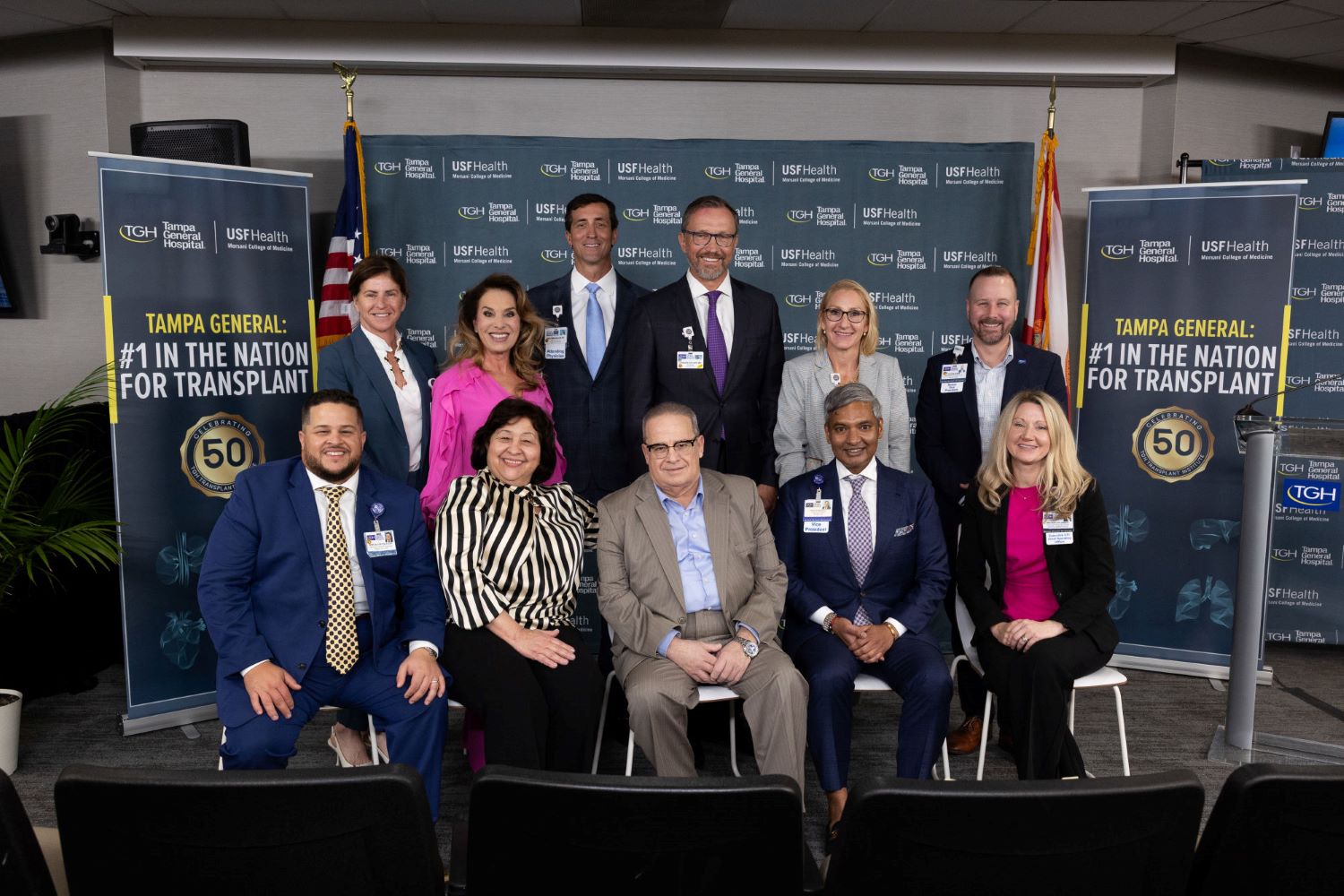 The expert team at the TGH Transplant Institute. Gundars Katlaps – 2nd row, 4th from the left. Publicity photo
You have a successful career as a surgeon in the US, but you have also maintained ties with Latvia, including being a member of the RSU Council. How do you see the University’s role and contribution to the development of medicine in Latvia? What do you believe are the most important steps needed to ensure continued progress?
For 75 years, RSU has been synonymous with high-quality medical education in Latvia. I greatly value the University’s growth, both in terms of quality and scale. It is essential to continue strengthening its reputation as a world-class academic institution and to further expand cooperation with clinical medicine structures, including medical professionals who study and work abroad.
In Latvia, the field of cardiac surgery is well developed, and I always welcome opportunities to share and exchange experience.
About Gundars Katlaps
Gundars Katlaps earned his medical degree at the Latvian Medical Academy (now Rīga Stradiņš University) and Stanford University, and completed his postgraduate training at the Medical College of Virginia and Papworth Hospital in Cambridge. Katlaps has many years of experience in leadership roles at medical institutions in Virginia and Florida, within medical research and education, as well as several years as director of the cardiothoracic surgery residency programme. From 2014 to 2019, he served as the Honorary Consul of Latvia in Virginia, USA.
Related news
 RSU Innovation Day to Bring Together Students, Researchers and EntrepreneursFor RSU Employees, For Students, Innovation