
Scientific Laboratory of Molecular Genetics
Summary of scientific activities on the RSU Research Portal
Accredited medical laboratory according to ISO:15189 standards with an LATAK-633-2020 accreditation certificate, within the framework of which part of its examinations are accredited.
The Scientific Laboratory of Molecular Genetics conducts research on the genetic causes of diseases and their characteristics, especially in the field of rare diseases, the use of biomarkers in diagnostics, and prognosis of the course of diseases.
The laboratory provides students, residents, and doctoral students with the opportunity to develop scientific research.
The laboratory cooperates with various partners both in Latvia (the genome database of the Latvian population, Riga Eastern Clinical University Hospital, the Children's Clinical University Hospital etc.) and abroad (the Academy of Medical Sciences of Ukraine, the Institute of Hereditary Pathology and more).
Research Areas
- Rare monogenic disorders
- Cystic fibrosis (mucoviscidosis)
- Wilson disease
- Apha-1-antitrypsin deficiency
- Kennedy disease
- Ornithine transcarbamilase deficit
- Crigler0Najjar syndrom etc.
- Monogenic pathologies
- Gilbert syndrome
- HFE-related hereditary haemochromatosis
- Multifactorial pathologies
- Infertility
- Myeloproliferative disorders (JAK2, CALR, MPL gene allelic variants)
Research is conducted with permission from the Central Medical Ethics Committee.
Research services
DNA extraction from different biological materials
DNA extraction using an adapted phenol/chloroform method, which enables the isolation of high-quality DNA suitable for both immediate analysis and long-term storage. The extracted DNA is assessed qualitatively by measuring concentration (ng/μl) and purity (260/280 ratio); if required, DNA quantification can also be performed at additional cost using a Qubit fluorometer (Thermo Fisher Scientific, USA) or a TapeStation bioanalyzer (Agilent Technologies, USA).
Genomic DNA extraction from venous blood has been externally quality-controlled (IBBL – confirms biobank-grade quality of the extracted DNA; RFB-DGKL – confirms suitability of the DNA for rapid genotyping; GenQA – confirms suitability for long-read sequencing).
One external quality control certificate has been obtained from IBBL for microbial DNA extraction from saliva.
In addition to the external quality control certificates, we also perform microbial DNA extraction from smears, swabs, and pure cultures (the laboratory needs to be contacted in advance).
Sequencing (Sanger, NGS)
With Sanger sequencing, we offer sequencing of a single genetic variant, gene region, or gene. This service includes providing raw data in .ab1 format as well as sequence analysis. If you require a molecular report with clinical interpretation, please refer to the Diagnostic Services section. Sanger sequencing and clinical interpretation are validated by external quality control schemes from RFB-DGKL (confirming technical performance and clinical interpretation).
Capillary electrophoresis is also employed for fragment length determination, which is useful for indel and microsatellite detection. In the Diagnostic Services section, this method is used to detect indels in the CALR gene as well as for Gilbert syndrome.
For next-generation sequencing (NGS), we currently outsource exome sequencing but perform clinical interpretation of genetic variants. If molecular reporting is required, please refer to the Diagnostic Services section. For some disease groups, this service has been externally quality-controlled, particularly in the clinical interpretation section, including molecular reporting from EMQN, CF Network and GenQA.
Genotyping (qPCR)
The laboratory is equipped with a variety of real-time PCR machines, including the RotorGene 2000 (Qiagen, Germany) and the QuantStudio Pro 6 (Thermo Fisher Scientific, USA). These machines enable genotyping using hydrolysis probes, screening for genetic variants with High Resolution Melting (HRM), and quantification of genetic variants (for somatic variants). As part of our Diagnostic Services, we offer genotyping of genetic variants in the DPYD gene (certified by the GenQA external quality control scheme) using hydrolysis probes, as well as the JAK2 p.V617F genetic variant (certified by the Instand.de external quality control scheme).
Analyses
| Name | Time (working days)* |
|---|---|
| DNA isolation from peripheral blood with EDTA anticoagulant | 10 |
| DNA analyses | |
| Cystic fibrosis – Detection of dF508 and dele 2,3 in CFTR gene | 10 |
| Cystic fibrosis – Sequencing of the coding part of the CFTR gene | 60 |
| Male infertility (azoospermia) – Analysis of AZFa, AZFb and AZFc regions | 20 |
| Inherited thrombophilia – Detection of (FV) Leiden G1691A and (FII) Prothrombin G20210A | 20 |
| Risk factors for thrombophilia – Detection of C677T and A1298C in MTHFR gene | 20 |
| Myeloproliferative neoplasia – Detection of p.V617F variant in JAK2 gene | 60 |
For other genetic testing options, contact mgzl rsu[pnkts]lv
Employees


Related news

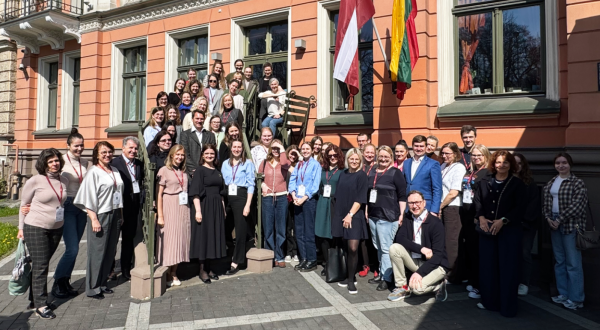 Baltic specialists in metabolic diseases gather in Riga: focus on latest therapies and AI in diagnosticsResearch, International Cooperation
 RSU to hold Baltic Flow Cytometry Society conference this monthConferences, workshops, Research
 Madara Auzenbaha, RSU Researcher of the Year 2024: ‘Be like an explorer.’Researchers Up Close
 International Workshop on National Plans for Rare Diseases Held in RīgaConferences, workshops, Research, International Cooperation

