How can herbal extracts supplement antibiotics in the treatment of cow mastitis?


Renāte Teterovska's doctoral thesis explores the potential use of plant extracts in veterinary medicine. The aim of the study was to determine the amount and types of phenolic compounds present in selected plant extracts, as well as to evaluate their antioxidant and antibacterial activity against bacteria that cause bovine mastitis.
‘European ethnopharmacological studies have documented the use of 590 plant species for various veterinary conditions, but there is very little research-based evidence supporting the effectiveness of plants in the treatment of bovine mastitis,’
says Teterovska, the author of the thesis.
The plant samples studied included the flowers and leaves of tansy (Tanacetum vulgare L.), wormwood, mugwort, heather, and oak bark – all species found in Latvia. There is a lack of scientific literature on these specific plants, and even less on their use in veterinary medicine. Therefore, the author focused on evaluating the antibacterial and antioxidant properties of these plant extracts.
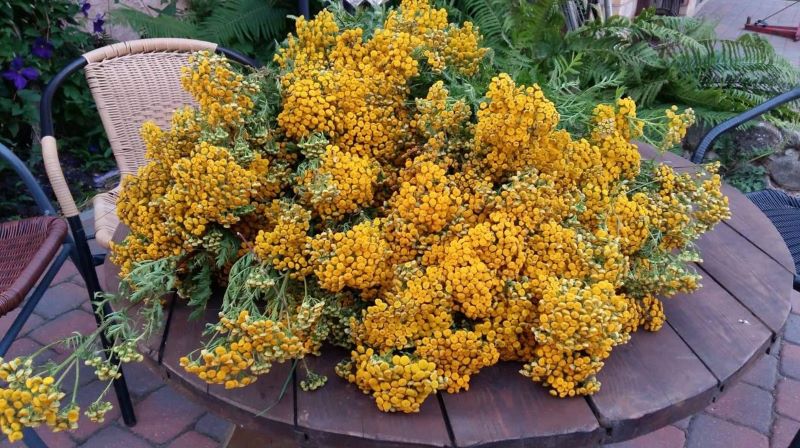 Tansy harvest. Photo: Courtesy of Renāte Teterovska
Plants from the Asteraceae and Ericaceae families are among the most commonly used in Latvian traditional medicine. Wormwood, mugwort, and tansy (Asteraceae) are traditionally used to treat digestive, nervous system, respiratory, and skin disorders. Heather (Ericaceae) is used to alleviate pain and inflammation. Oak bark and wormwood are also frequently mentioned in Latvian folklore as medicinal remedies.
Samples of bacteria causing bovine mastitis were provided by the Biotechnology Research Laboratory of the Latvia University of Life Sciences and Technologies. The antibacterial effects of the plant extracts were analysed at the Department of Biology and Microbiology at Rīga Stradiņš University (RSU). In the future, the study should also be continued in animals.
What the antibacterial analysis of plant extracts revealed
The study found that the analysed plant extracts exhibited both antibacterial effects against mastitis-causing bacteria and antioxidant activity.
The tested plants contained significant levels of phenolic compounds and tannins, which are often overlooked in research but have known pharmacological effects. Antibacterial activity was found to depend more on the specific combination of phenolic compounds than on their total quantity. Combining different plant extracts may enhance antibacterial potency and broaden their spectrum of activity.
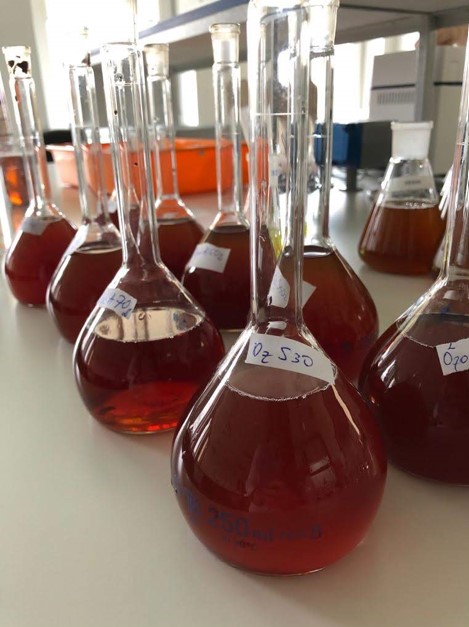 Sample preparation – oak bark Photo: Courtesy of Renāte Teterovska
The flowers and leaves of tansy, oak bark, and the tops of heather plants showed the most promising antibacterial properties – both against bacteria responsible for bovine mastitis and against multidrug-resistant bacterial strains.
Oak bark, heather stems, and tansy also demonstrated potential antioxidant activity. The phenolic compounds in these plants significantly contributed to their antiradical effects, which may positively influence healing processes.
Next steps
These results suggest that plant-derived natural substances could be developed into new antimicrobial agents to help combat antimicrobial resistance.
Future studies should explore the effects of these extracts in animals, their synergies with antibiotics, and their potential applications for other health conditions. The data from this research could be used to develop formulations with either preventive or curative properties for bovine mastitis.