RSU Innovation Centre Director: The market is the ultimate test of an idea


Agnese Oļševska, the Director of the RSU Innovation Centre, joins the university with experience closely linked to innovation, business development, and technology.
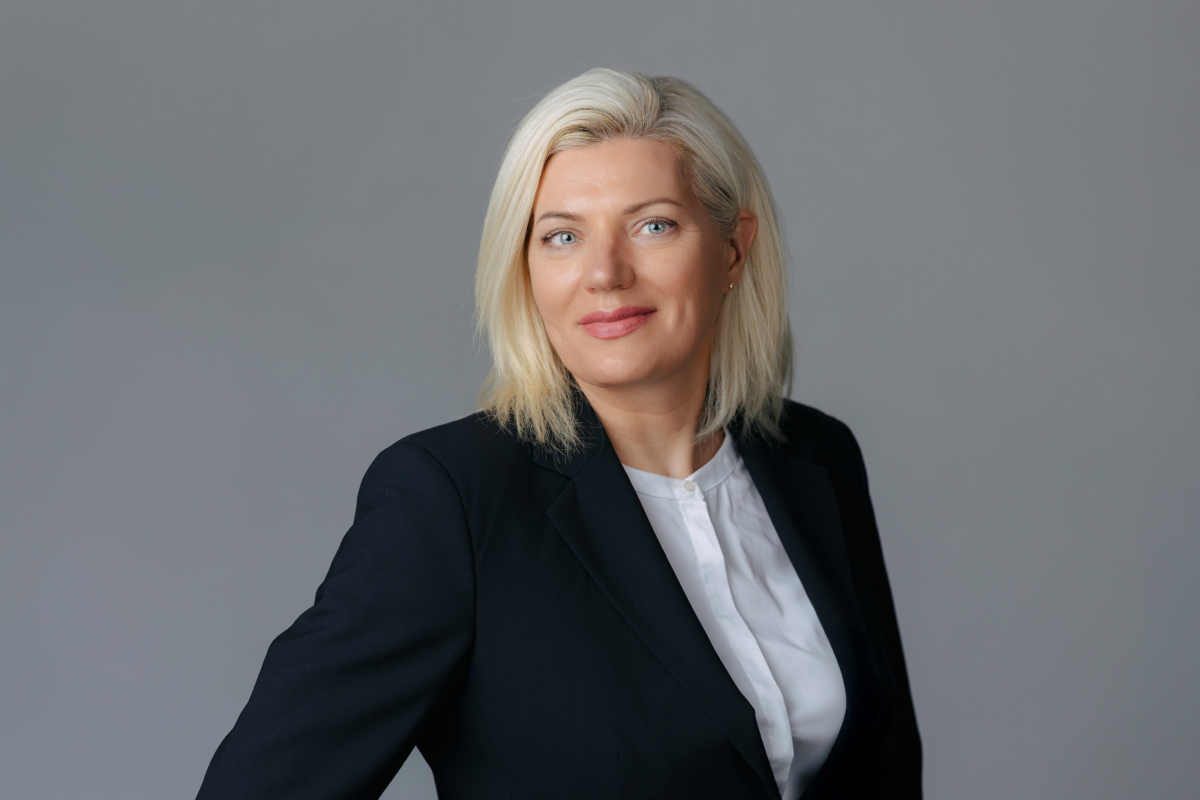
In the conversation, she emphasises that she wants to use her professional experience to help students, researchers and industry come together in a practical, purposeful and mutually beneficial way.
What is your professional background?
I have worked both in university environments, public administration, and directly with entrepreneurs, supporting them from the initial concept and continuing through to development, market validation, exports, and attracting investment.
Before joining RSU, I also worked in an academic setting,
managing projects and teaching innovation management and business development to students.
I also headed the LIAA (Investment and Development Agency of Latvia) Jelgava Business Incubator and created the LIAA pre-incubation programme. This programme, based on design thinking and the Lean approach, was later introduced across all LIAA business incubators.
This was followed by work at the LIAA Riga office, where I headed the Innovation and Technology Department. This department was responsible for supporting startups, business support programmes, international projects, as well as supporting major events such as Deep Tech Atelier, PMNET, and Techritory. The total project portfolio under my supervision exceeded ninety million euros. I also led the LIAA Innovation and Technology Representative Offices in Israel, Brussels, and Switzerland (CERN).
Throughout my career, I have come to believe that a good idea alone is not enough for innovation.
It requires a process, a team, an understanding of the potential users of the product or service, and the ability to test in practice whether this solution is genuinely needed and whether it creates value that people are willing to pay for.
What does this experience bring to the RSU Innovation Centre?
It allows us to take a highly practical approach to the Innovation Centre's operations. For example, it helps us guide the ideas of researchers, students, staff, and industry professionals from initial concept to practical application and commercialisation opportunities.
The Innovation Centre should not be merely an advisory body.
It needs to become a one-stop agency where anyone with an idea knows exactly where to go, what support they can receive, and what the next step is.
For a researcher, this might mean an intellectual property evaluation or finding an industry partner. For a student, it could involve idea validation, team building, or joining an incubator programme. For a company, it offers a clear point of contact to discover RSU's expertise and collaboration opportunities.
This means shifting from isolated activities to a well-defined, systematic innovation process with clearly defined services, better internal coordination, more visible information on the RSU website, and closer cooperation with faculties, institutes, departments, and external partners.
Experience shows that such processes are already well-established in many places. We can learn from the best practices instead of reinventing the wheel.
What are your first priorities at the RSU Innovation Centre?
The first task is to streamline processes. If a process is unclear or overly complex, innovation often stalls at the administrative level. Therefore, it is vital to reduce bureaucracy, clearly define the Innovation Centre’s services, and ensure rapid internal coordination and consistent information across RSU. Processes must be comprehensible, practical, and as straightforward as possible. This cannot be achieved within the Innovation Centre alone. It must be done in close cooperation with other RSU units.
The second priority relates to information for the industry and businesses. This information must be easily accessible on the RSU website.

Companies need to understand how to reach us, whom to speak with, and what RSU has to offer.
The third task is internal preparation. We must map out what lies within RSU – identifying our expertise and core strengths. Only then can we state precisely what we can offer to the industry.
Why is it important to understand RSU’s internal offerings first?
You cannot build relationships with businesses simply by asking what they need, as researchers are not always immediately able to meet a specific demand. This can be affected by workloads, available resources, or other factors. Therefore, we must also work from the inside out. We need to map RSU's internal expertise, research capacity, ongoing projects, and collaboration opportunities so that we can approach businesses with a specific, clearly formulated offer.
A strong foundation for developing this collaboration model is RSU's status as a NATO DIANA test centre.

RSU has become the first NATO Defence Innovation Accelerator test centre in the North Atlantic region in Latvia to operate outside of military bases and is the only university in Latvia to perform this function.
This status provides innovation developers, start-ups and researchers with the opportunity to use RSU’s academic, research and technological infrastructure for the development, testing and validation of solutions significant to the defence sector. At the same time, it creates a practical cooperation platform for companies that receive support within the DIANA framework and can approach RSU with specific needs. We are already seeing the first concrete requests that confirm the potential of this direction.
In my opinion, the Innovation Centre’s contribution is to make RSU’s expertise more visible, understandable and accessible to external partners.
The more actively RSU engages in the conversations and processes of the innovation ecosystem, the more opportunities will emerge for new projects, attracting investment, and developing the ideas of students and researchers.
How does the RSU Innovation Centre help students who have a business idea?
We do not tell students whether their idea is good or bad. Only a potential buyer or user can answer that question. Under the student innovation grant programme, students can learn, develop a prototype, and receive funding ranging from EUR 3,000 to EUR 14,000 to develop their ideas. Our task is to help them ask the right questions and test their assumptions in practice.
Students often initially assume that their idea will be useful to someone, but it is essential to engage with the potential user or buyer to discover whether that need genuinely exists.
Validation does not happen when a partner simply says they would use the technology. True validation comes when a potential customer or partner is willing to pay for the solution. This is the mindset and practical validation process we teach our students.
What is next for the B-Space business incubator?
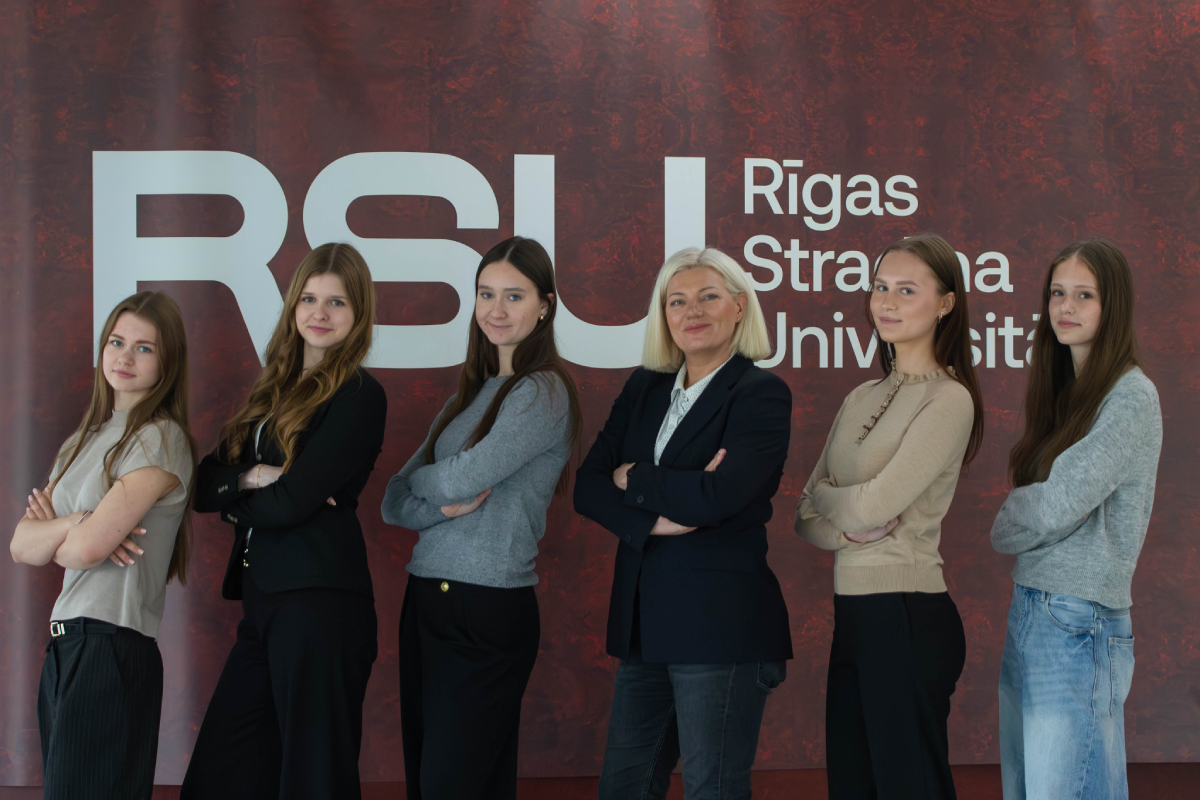
A new intake of participants is scheduled for the B-Space business incubator in September, which will include the launch of the pre-incubation programme. Its goal is to help participants understand whether their business idea has potential, whether they want to pursue it long-term, and how it can be developed further.
The pre-incubation phase is followed by the incubation stage, during which participants have an extended opportunity to develop a prototype and test their idea in practice. RSU students, researchers, and staff are invited to apply. B-Space is open to anyone who has an idea and the drive to develop it.
We are particularly keen on forming interdisciplinary teams, as combining diverse knowledge, experiences, and perspectives often yields the most valuable solutions.
Can teams also include participants from other universities?
Yes, teams may also include students from other universities. Only some higher education institutions in Latvia implement the student innovation grant programme, so not all students have access to this type of funding for developing business ideas.
We are open to inter-university collaboration and gladly welcome students from various universities into our teams. However, there is a requirement that at least one team member must be from RSU.
Agnese Oļševska views the development of the RSU Innovation Centre as a practical and systematic process. In her view, the first step is to streamline processes, map RSU’s internal expertise, and make information easily understandable and accessible to industry representatives. At the same time, the Innovation Centre must be a place where students, researchers, and staff can test their ideas, build prototypes, and determine whether there is market interest in these solutions. Her experience at LIAA allows her to view innovation not just as a creative process, but as a practical journey where an idea must meet the user, the customer, and the market. The mission of the RSU Innovation Centre is to make this path clearer, more understandable, and accessible to anyone who wants to develop their idea.
Project no. KPVIS 5.2.1.1.i.0/2/24/I/CFLA/005 RSU internal and RSU with LASE external consolidation.
Related news
 RSU Rector presents the university’s achievements and future goals at Academic Meeting For RSU Employees, Internal consolidation, Consolidation, Traditional Events