
Teaching students and ministers: Prof. Gunta Lazdāne on her experience in Latvia and the World Health Organization


Gunta Lazdāne, Professor at the Rīga Stradiņš University (RSU) Department of Obstetrics and Gynaecology, is one of the most renowned specialists in sexual and reproductive health in Latvia and internationally. Her professional career has been closely linked to the World Health Organization (WHO), where she was responsible for sexual and reproductive health at a European level. In Latvia, her contribution centres on teaching young doctors and students, as well as conducting research.
In this conversation, Prof. Lazdāne reflects on her major achievements in medicine, shares her experiences of working in an international environment, and discusses Latvia’s demographic challenges.
Professional achievements in Latvia and worldwide
Looking at your previous work, what are you most proud of?
That is a very difficult question. I have worked both in Latvia and abroad. For fifteen years, I was with the WHO, and my greatest achievements are definitely connected to that period.
The European Action Plan for Sexual and Reproductive Health, which I developed together with my colleagues, is a document that brought together 53 countries. It was an extremely complex process, but also my most significant professional contribution.
My most important memories and achievements in Latvia are linked to my work as a lecturer. Working with students and residents, I have sought to teach not only medical skills but also how to treat women. During the Soviet era, medical practice was much more impersonal, even harsh. I have always felt it is important to emphasise respect for patients. Even small details, such as knocking before entering a room, can make a woman in a vulnerable situation feel valued and respected. I believe medicine is not only a profession and a science but also an attitude.
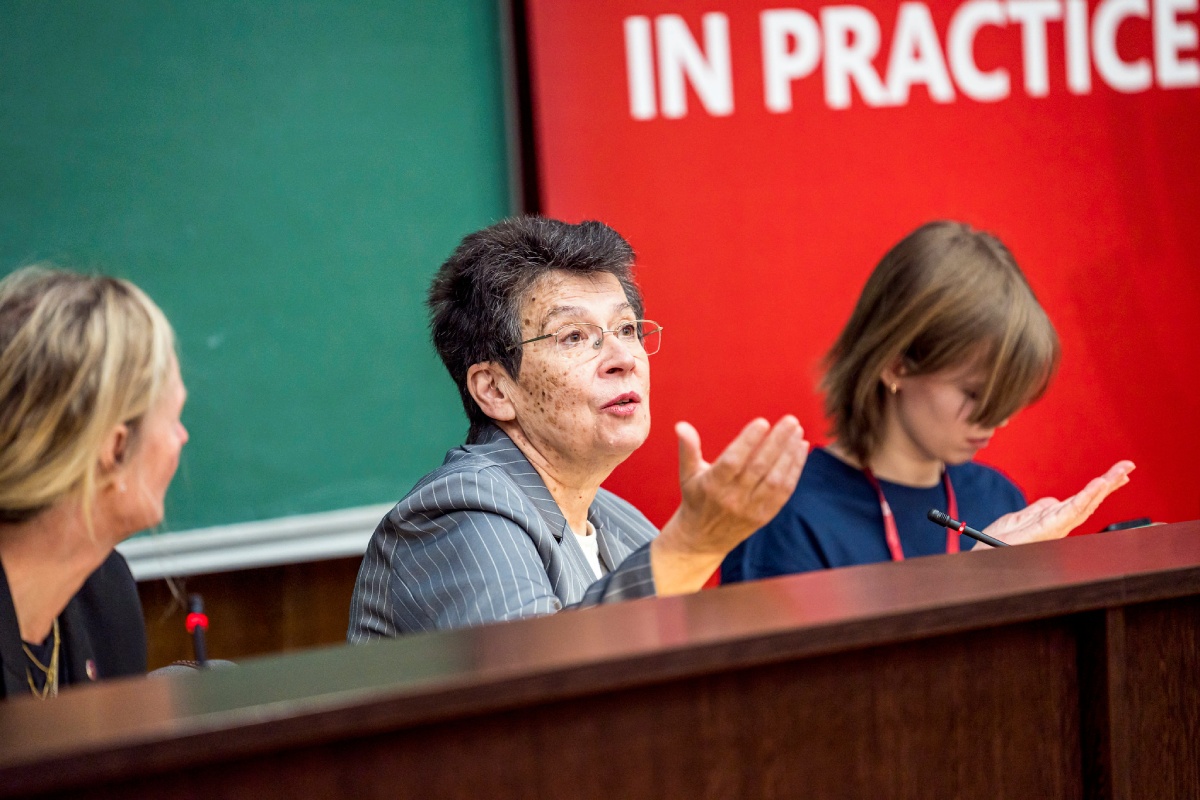 Prof. Gunta Lazdāne (centre) at the RSU Research Week conference ‘Knowledge for Use in Practice’, March 2025
Working at the World Health Organization
What were your biggest challenges working at the WHO?
That work was on a completely different level from my previous teaching experience.
In Latvia, I taught students and young doctors, but there I had to address ministers and government representatives. And believe me, ministers are no easier an audience than students.
They have different perspectives, political and economic agendas, and are often prejudiced.
My knowledge of Russian proved very useful, making my work easier in several countries. The knowledge of people involved in healthcare, health policy makers and the population itself varied greatly across the countries of the WHO European Region. I remember how midwives in Turkmenistan told me that there were women who, after giving birth to several children, still did not know how childbirth worked. In Spain, on the other hand, the problem was different: sexual health issues were often swept under the carpet, even though reproductive health was generally well organised.
How did countries agree on the European Action Plan for Sexual and Reproductive Health?
Reaching an agreement was not easy. When the plan was presented to the European Regional Committee, the atmosphere was tense. These matters inevitably provoke strong emotions. Poland, Hungary, and Turkey refused to support the plan, which was not surprising given their political and religious positions. For a time, Russia was also very hesitant. Had it refused, other countries within Russia’s sphere of influence would almost certainly have followed suit. In the end, the plan was adopted, and countries are now required to report on the implementation of the agreed priorities every three years.
Latvian demographics: medicine and social reality
Let’s move on to a topic that is relevant to Latvia – demographics. What would be your recommendations in this area?
It must be said that much has already been done in the field of medicine. Medically assisted reproduction is available, and the state partially covers the costs. There are practically no waiting lists. From an obstetrics and gynaecology perspective, there are no significant obstacles in Latvia.
The demographic problem in Latvia does not lie in healthcare. It is largely a social issue.
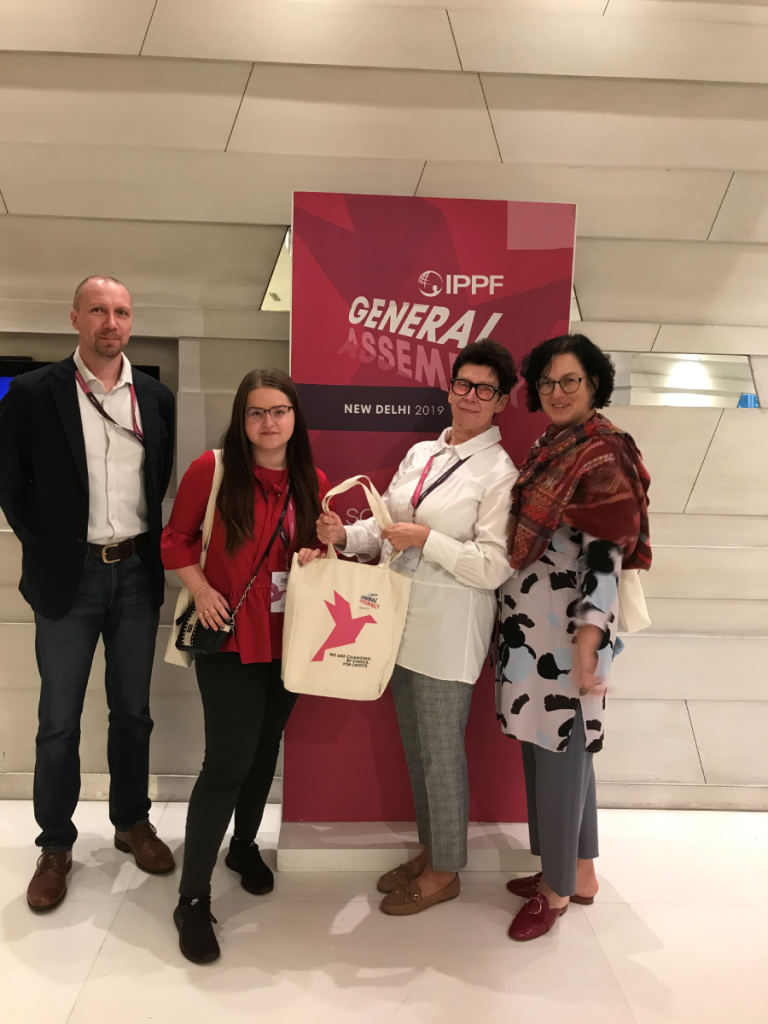 Prof. Lazdāne (second from right) with colleagues at an international conference on reproductive health
I am convinced that the biggest challenge is alcohol consumption and its impact on relationships. Not in the sense that people drink and are unable to have children, but rather that educated women with high standards do not want to start a family with a partner who lacks reliability and stability.
I remember a patient over the age of 30 who had become pregnant but chose to have an abortion. I tried to speak to her, however, she said: ‘I cannot afford a child. I have a drunk husband at home whom I should take care of.’ This case has stayed with me as a stark example of how the economy is not the most important factor in demographics, but rather the need for a safe and stable family environment.
This is a broader societal trend.
High levels of education and career opportunities often turn family matters into a choice rather than a natural part of life.
If people do not have certainty about being able to have a stable relationship, then they end up not wanting children. This, of course, affects birth rates in Latvia.
Takeaways from life and work
What is the main takeaway from your professional life so far?
Big changes start with small things. I have seen this both in Latvia, working with students and patients, and at the WHO, discussing issues with ministers. Everything begins with respect, genuine interest, and the ability to delve deeper. That is the most important lesson.
Related news
 Piecing fractured bones back together: Dr Raitis Turkins on residency training in Jelgava RSU in the news, Residents' Stories, Graduate Medical Training, Interviews


