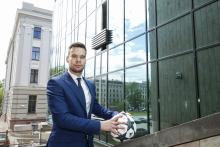
Last year we met with prospective graduates from all three social sciences faculties of Rīga Stradiņš University (RSU) just before graduation. This year, we are inviting them back to a conversation to find out what has changed since we last spoke.
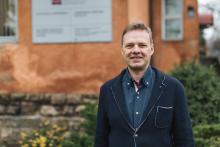
‘People’s attitudes towards the crisis and the state of emergency depend on the situation they’re in, their savings and material security,’ says Klāvs Sedlenieks, social anthropologist and lecturer at Rīga Stradiņš University. Speaking to journalist Rūta Kesnere for the newspaper Diena, Sedlenieks stresses that growth is not possible without crises, but that each crisis does not automatically lead to growth and development. A crisis can make you stronger, or it can break you.
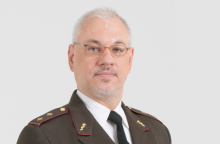
Lieutenant Colonel Normunds Vaivads, Chief Medical Officer in the Medical Service of the Joint Headquarters of the National Armed Forces (NAF), has two passions in life – medicine and the military. This is the reason why the Lt Col chose to continue his education with the Health Management master's programme offered jointly by Rīga Stradiņš University (RSU) and RISEBA.


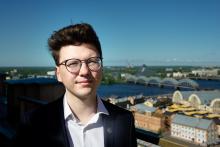
We have been in touch with Arkādijs Zvaigzne twice, in February and in May, and it seems like an entire era has passed between the two conversations. He returned to Riga from the East Coast of the United States shortly before the COVID-19 pandemic and obtained a master’s degree from the University of Pennsylvania online. Rīga Stradiņš University (RSU) was the first higher education institution Arkādijs attended.
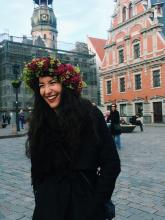
Irina Mariotti is from Bolzano in northern Italy. She started her medical studies at Rīga Stradiņš University (RSU) in February 2016.
What is your favourite time of year in Riga?
June is one of my favourite months in the city. Every corner of the city is decorated with colourful flower compositions. The gardening culture is something I really like. Jāņi, or Midsummer Day, is one of my favourite Latvian celebrations.
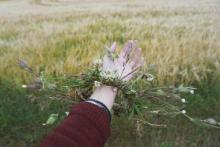
Michael Strmiska is currently working at Rīga Stradiņš University (RSU) on a Fulbright Scholarship from the United States. He has a PhD in Religious Studies and is in Latvia to teach religion-oriented courses at the departments of anthropology and media studies. He became interested in European pagan movements after visiting Iceland in 1996 on another Fulbright Scholarship. Witnessing an autumn equinox ritual there and feeling its spiritual power, Dr. Strmiska's interest in paganism grew, and took over his academic life.

Dear newly enrolled RSU Student,
Congratulations on being admitted to Rīga Stradiņš University (RSU)! I am delighted to learn that you will be joining RSU this autumn and hope that you feel enthusiastic about starting your studies at our university.
To help you better prepare for your studies at RSU, I would like to inform you about several important matters: