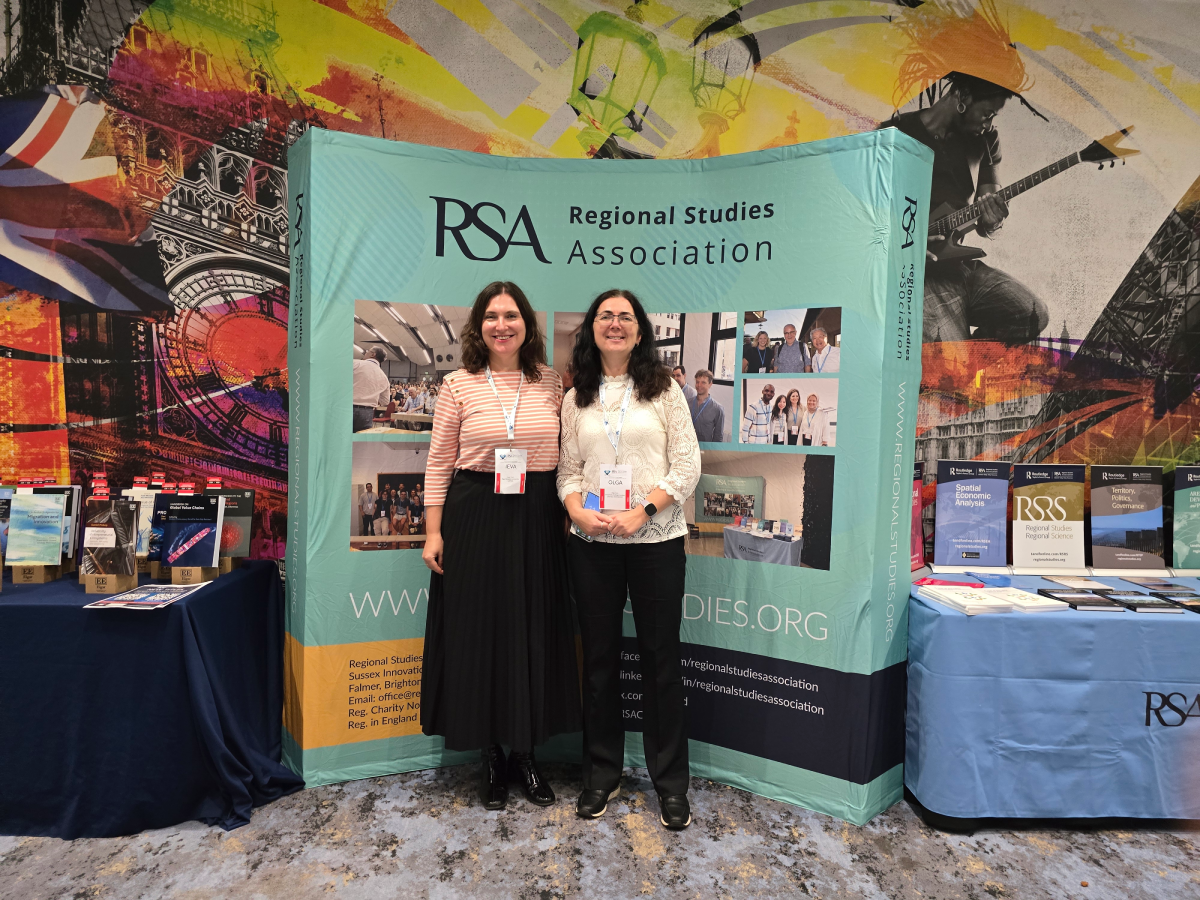
RSU pētniece Ieva Puzo piedalās RSA Regional Futures Conference Londonā


Rīgas Stradiņa universitātes (RSU) Sociālo zinātņu fakultātes vadošā pētniece un projekta (R)E-TIES vadītāja Ieva Puzo piedalījās starptautiskajā konferencē 2025 RSA Regional Futures Conference, kas norisinājās 2025. gada 13.–14. novembrī Apvienotajā Karalistē, Londonā.
Konferencē I. Puzo kopā ar projekta (R)E-TIES kolēģi Olgu Caru (University College London, UCL Institute of Education / RSU) uzstājās sesijā Universities and Skills as Drivers of Regional Change (Studio 5) ar referātu Ethnic Ties in the Scientific Diaspora: The Case of Latvia. Savā prezentācijā pētnieces analizēja etnisko saišu nozīmi zinātniskajā diasporā, īpaši pievēršoties Latvijas piemēram un akcentējot šo saišu lomu zināšanu apritē, sadarbības veidošanā un reģionālajā attīstībā.
- Tēzes "Ethnic Ties in the Scientific Diaspora: The Case of Latvia"
Ieva Puzo (Rīga Stradiņš University)
Olga Cara (University College London, UCL Institute of Education)For decades, the emigration of intellectuals and highly skilled professionals was framed primarily as a loss for countries of origin—so called brain drain. Over time, perspectives broadened towards brain circulation (Gaillard & Gaillard, 1998) and brain gain (Dustmann et al., 2011; Saxenian, 2005), shifting attention from physical return migration to sustained, often intense, transnational connections and networks. In this context, studies of nationality and ethnicity have become integral to exploring whether and how such ties influence the formation and maintenance of knowledge networks.
The science diaspora has long been on the policy agenda for science and education. While external identification as a diaspora scientist does not automatically entail willingness to engage with the home country, research suggests that the universality of science may reduce the salience of national belonging in network formation (Gaillard et al., 2015; Jöns et al., 2015). Yet, other studies point to the continued significance of kinship, emotional, and identity based ties linked to ethnicity and nationality (Gaillard et al., 2015; Leung, 2015; Tejada, 2012).
This presentation examines the Latvian scientific diaspora, focusing on the role of ethnic and national bonds in developing and sustaining transnational knowledge networks. While international mobility is often considered a normal aspect of scientific careers (Mahroum, 2000), the concept of scientific nomadism (Meyer et al., 2001) only partially captures these dynamics: many scientists maintain strong emotional and local attachments to their home country. Viewing these networks as social projects or communities of practice, the paper explores how personal, social, professional, national, and ethnic bonds are mobilised to maintain community.
The primary data come from 2021 research commissioned by Latvia’s Ministries of Education and Science and of Foreign Affairs, complemented by surveys, 28 interviews, and focus groups with 19 diaspora scientists in multiple countries.