VIRCAN2026 Conference
Chronic viral infections and cancer
7-8 December 2026
Online and in-person (5 Rātsupītes iela, Riga)
The conference VIRCAN2026 is organised within the framework of the project Genetic characterization of high-risk human papillomaviruses in Ukraine and Latvia to inform national policy of cervical cancer prevention funded by the Latvian Science Council. The aim of the conference is to strengthen the potential of researchers of the Baltic Sea Region, with the focus on Latvia, in the field of chronic viral infections and cancer. Together, we will dwell into pathogenesis of such infections, dissect the mechanisms of virus induced malignant transformation, and explore the most recent developments of specific therapies and vaccines.
The conference will continue the line of research meetings on chronic viral infections, cancer, openings for vaccines and cure, held in Riga, Latvia since 2022.
- Maria Issagouliantis, PhD, Assoc Prof, Lead Researcher, RSU Institute of Microbiology and Virology, Latvia
maria[pnkts]issagouliantis rsu[pnkts]lv
- Franco Maria Buonaguro, Prof., Doctor of Medicine; Director Emeritus at Istituto Nazionale Tumori "Fondazione Pascale", Naples, Italy
f[pnkts]buonaguroistitutotumori[pnkts]na[pnkts]it
- Juris Jansons, Visiting Researcher, RSU Institute of Microbiology and Virology
- Mariia Nazarenko, Visiting Research Assistant, RSU Institute of Microbiology and Virology
- Dita Pole, Project Manager, RSU Development and Project Department
- Jūle Mare Rozīte, Web Development Manager, RSU Communications Department
- Aigars Červinskis, Senior Web Editor, RSU Communications Department
Key dates
| 9 October 2026 | Registration opens |
| 23 November 2026 | All abstract submission closes |
| 30 November 2026 | Registration closes |
| 1 December 2026 | Abstract acceptance notifications |
VIRCAN2026 will be held as a hybrid conference, virtually via Zoom and in person for those working and studying in Riga.
Location: RSU Institute of Microbiology and Virology, Room 109, 2nd floor, 5 Rātsupītes iela, Riga
We invite all researchers, from those in the early stages of their careers to established scientists, to attend and speak on a broad range of subjects including molecular epidemiology and pathogenesis of chronic viral infections and cancer, mechanisms of virus-associated carcinogenesis, viral infections/cancer cure and vaccines. Special focus will be placed on high risk human papillomavirus infections, molecular epidemiology, pathogenesis, screening, diagnostics, and vaccination. Presentations will be organised in five sections, each session will open with a plenary lecture by a known expert in the field.
Participation in the conference is free of charge with prior registration.
Programme
The two-day scientific programme will include five sessions: two general sessions, and three sessions on high risk human papilloma virus infection (HPV). Each session will be opened by keynote lecture of a well-known specialist in the field.
Day 1 (7 December)
- 1: Chronic viral infections: pathogenesis, cure, vaccines
- 2: Cancer: pathogenesis, and drivers, cure, vaccines
Day 2 (8 December)
- 3: HPV – pathogenesis, associated cancer
- 4: HPV - molecular epidemiology, screening, diagnostics
- 5: HPV – treatment, cure and vaccines
The preliminary programme with the names of the invited speakers and invited lecture topics will be published in mid-October. The final programme will be published after all submitted abstracts are reviewed. Expected date - 1 December 2026.
Early-career researcher contest
The conference's co-chairs, together with an expert committee of independent researchers, will hold a contest for the best presentations of early-career researchers - researchers who are 36 years or younger at the time of the conference. Winners of the top three places will get monetary awards to the amount of 300, 200, and 100 euros respectively. The two best presentations will receive vouchers for free publication of the results of their studies in a special issue of the journal Vaccines.
Registration guidelines
When registering, participants will be asked to provide:
- full name,
- affiliation,
- contact email,
- abstract (if you would like to participate with a presentation),
- acknowledgement of the Data Processing Notice,
- optional consent to share contact details with QS.
Registered participants and speakers can receive a Certificate of Attendance. Please contact the organising committee if you wish to receive one (maria[pnkts]issagouliantisrsu[pnkts]lv).
Abstract Submission
Submitted abstracts will be assessed by an expert committee. The committee will notify authors of acceptance and the form of presentation (oral, poster) by 1 December 2026. Organisers aim to give early-career researchers an opportunity to give 10-15 min. oral presentations. Poster presentations will be allocated 5 min. slots. Sections will be defined based on the topic of the abstract.
Abstracts can be submitted during registration, but no later than 23 November 2026. Invited keynote speakers must also register and submit their abstracts by 23 November 2026. Registration for all participants will remain open until 30 November 2026.
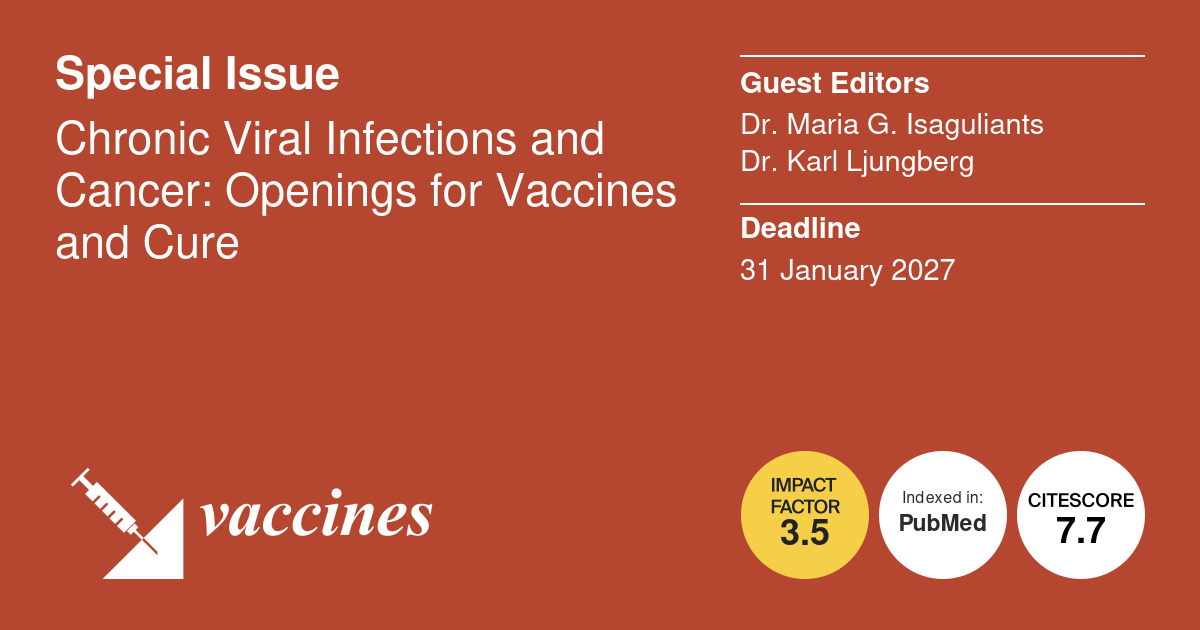
Accepted abstracts will be collected in a book with conference proceedings and shared on the conference website on the RSU server. Selected presentations will be invited to submit to a special issue of the journal Vaccines (submissions for the issue will close 31 January 2027).
Guidelines
Abstract format
VIRCAN2026 accepts two types of abstracts - regular abstracts for oral or poster presentations, and abstracts of invited plenary lectures.
- Format: Word, or PDF document;
- Font: Times New Roman, size 11;
- Line-spacing: one-line with 2cm margins on all sides;
- Length: 4,000 characters (incl. spaces, excl. title and author information).
Contents of regular abstracts
- Title (not more than 150 characters, incl. spaces);
- Authors (surname, first name), indicate the corresponding author;
- Affiliations for all authors;
- Background: a concise statement of the issue under investigation, or a hypothesis;
- Materials & Methods: the experimental methods used (including the statistical analyses employed);
- Results: specific findings;
- Conclusions: a summary of findings that are supported by your results (statistical analyses used to support the conclusions);
- Acknowledgements;
- References to publications (max 3)
Contents of abstracts for plenary lectures
- Title (not more than 150 characters, incl. spaces);
- Authors (surname, first name), indicate the corresponding author;
- Affiliations for all authors;
- Background: describe the importance of the revised field of research;
- Aim(s): subject of the review;
- Topics overviewed: short description of the overviewed topics; own findings of the author in this context;
- Conclusions: resume of the progressed achieved so far and perspectives for the development.
- Acknowledgements;
- References to publications (max 5).
Contact
For questions regarding the programme, acceptance of abstracts, and forms of presentation, please contact Maria Issagouliantis.

Projekta zinātniskā vadītāja, Mikrobioloģijas un virusoloģijas institūts
For questions regarding abstract submission and publication of the abstract book, please contact Mariia Nazarenko.

For questions regarding registration, please contact Dita Pole.

Previous conferences and workshops
Vaccines and Vaccinations During and Post Covid Pandemics (7–9 December 2022)
VIRCAN2024 (21-22 November 2024)
Workshop on the Molecular Mechanisms of Cancer in Retrospect (10 November 2025)
International Workshop on cancer research (9 June 2026)
Photo gallery from the International Workshop on Cancer Research (9 June 2026)
Supporters